Toro Investimentos Login: Secure Access in the Santander Era (UK Guide)
Toro is now Santander Corretora and the login process has changed. Understand the migration, secure access, and how to avoid scams exploiting the rebrand.
by Cleverson Gouvêa
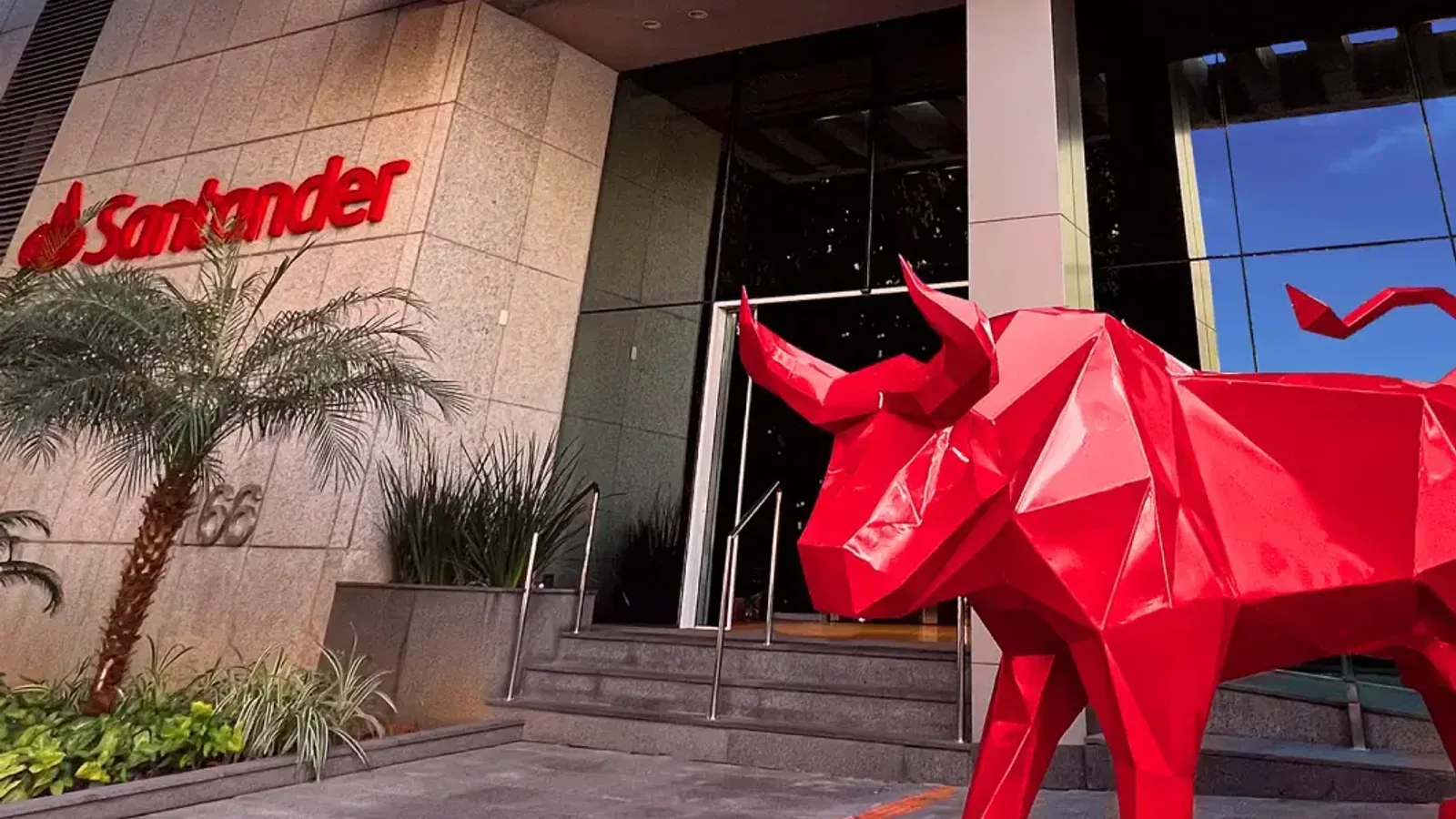
Toro investimentos login has become one of the fastest-growing Google searches in 2026 — and for good reason. Since 15 December 2025, Toro Investimentos has been rebranded as Santander Corretora, and millions of investors are trying to find out where and how to access their accounts safely. This guide explains secure access, how the migration works, and which scams to avoid.
Quick summary
- Toro Investimentos became Santander Corretora on 15/12/2025; the migration happens in waves until February 2026.
- Until your account is migrated, you continue using the Toro app and website; afterwards, access moves to the new Santander app.
- Scammers are exploiting the rebrand confusion with phishing that asks for passwords and tokens — the bank never requests these details.
- Enable two-factor authentication and only log in through official channels.
- For businesses, the lesson is clear: official channels and strong authentication protect your customers from the same type of scam.
Toro investimentos login: what has changed with Santander Corretora
If you have tried to log in to toro investimentos login in recent weeks and noticed the name "Santander Corretora" on the screen, it is not a bug. On 15 December 2025, Santander announced that Toro — a broker already owned by the group — would now operate under the Santander Corretora brand. The announcement was made on the Toro institutional blog.
The change is not just cosmetic. Santander is unifying the former Santander Corretora (code 027) and Toro into a single platform. All equity and government bond custody is transferred automatically at no cost to the client. In practice, Toro investors do not need to withdraw anything or open a new account: the assets migrate on their own.
For beginner investors, the core promise remains: zero commission on trades, custody and maintenance, with a minimum initial investment of R$ 100. Equities, government bonds, funds, pensions and even crypto assets are all in one place. The new feature Santander highlights is order automation, allowing you to schedule buy and sell orders based on profit targets or stop-loss limits — useful for those still learning to manage risk.
The point that causes confusion with login is the timeline. The migration happens in waves, from December 2025 to February 2026. During this period, both platforms coexist. If your account has not yet been migrated, you continue to access it normally via the Toro app and website. When your wave arrives, access moves to the new Santander app — and that is where many people get lost.
How to access your account securely during the migration
The golden rule for toro investimentos login is simple: only log in through official websites and apps. Type the address yourself in the browser or open the app you have already installed — never click on links received via SMS, email or WhatsApp.
Until your account is migrated, the path is the usual one:
- Official website:
toroinvestimentos.com.brorapp.toroinvestimentos.com.br - Toro Investimentos app (now displayed as Santander Corretora) on the App Store and Google Play
After migration, Santander directs the client to the new broker app. Communication about your wave date comes through the bank's official channels — and it is always informative, never a request to "re-register your password via a link".
One detail that causes confusion: the app has kept the same identifier in the stores (the same id on the App Store and the package br.com.toroinvestimentos on Google Play), so updating the existing app is safer than downloading a "new app" recommended by third parties.
The wave of scams exploiting the Toro → Santander rebrand
Every major brand migration is a goldmine for phishing, and this one is no exception. Scammers use the exact current script: "your Toro account will be deactivated, click to migrate to Santander". The social engineering creates a sense of urgency to steal passwords, tokens, or trick victims into installing a fraudulent app.
Three truths help you avoid falling for it:
- Santander does not call, send messages, emails or app notifications asking for your password, security code or card delivery.
- The migration is automatic. You do not need to "confirm data" via a link to keep access.
- Urgency is a red flag. Tight deadlines and threats of blocking are fraud tactics, not bank behaviour.
It is worth remembering that phishing has evolved: today, fake pages copy the broker's look pixel-perfectly and use similar domains, swapping a letter or adding a hyphen. That is why checking the address in the browser bar is as important as the password itself.
Santander itself has started displaying scam alerts inside the app while the client is on a suspicious call — precisely because the "fake call centre scam" has grown in the country. If someone on the phone asks you to confirm a transaction or provide a token, hang up and call the official number printed on your card.
Official channels vs. scam signs
Use this table as a quick reference before typing any password:
| Situation | Official channel | Scam sign |
|---|---|---|
| Account access | Installed app or URL you typed yourself | Link received via SMS/email/WhatsApp |
| Request for password/token | Never happens outside a login you initiated | Call or message asking for the code |
| Account migration | Automatic, no action required | "Re-register to avoid losing access" |
| New app | Update of the official app in the store | APK sent by third parties |
| Support | Number on the back of your card / official website | Number provided by the scammer |
Two-factor authentication: the layer that separates you from fraudsters
If there is one setting worth five minutes of your time, it is two-factor authentication (2FA). It requires a second factor in addition to your password — usually a code generated on your phone. Even if a scammer discovers your password, without the second factor they cannot get in.
Prefer authenticator apps (which generate a code every 30 seconds) over SMS, because SMS is vulnerable to SIM swap fraud. Keep your recovery codes in an offline place. And be suspicious of any screen that asks for your 2FA code "to validate the migration": the second factor is only for you to log in, never to confirm anything at someone else's request.
How to enable 2FA in practice
The path is usually in Settings > Security within the broker app. Enable two-step verification, choose an authenticator app, scan the QR code and store the backup codes in a safe place. Once done, it will protect all your future logins without daily friction. If the broker offers biometrics on your device, combine both layers: fingerprint or face to open the app, and 2FA for sensitive operations like withdrawals and transfers.
This logic applies not only to brokers but also to your email, bank, website dashboard, and any system that holds money or sensitive data.
Real complaints: what the Toro migration teaches us
It is worth looking at the other side. On Reclame Aqui (a Brazilian consumer complaints platform), some clients report difficulty accessing the new app after migration, as well as integration failures between bank and broker that froze transfers for weeks. These are public complaints recorded during the transition.
From an investor's perspective, this reinforces a habit: do not leave things to the last minute. If you notice your account has entered migration, confirm the valid app through official channels, test access calmly, and save the official support number before you need it. Panic is a scammer's best friend — and overloaded support queues increase the temptation to seek "shortcuts" that are actually traps set by fraudsters.
The lesson is clear for any digital business: poorly communicated migration becomes a security gap. When users do not know which app is correct, which URL is official, or why their account "disappeared", they become more susceptible to believing the first link that promises to fix it. Scammers exploit exactly that communication vacuum.
For the investor, the defence is patience and official channels. For the company managing the migration, the defence is clear, predictable communication through verifiable channels.
What this means for your digital business
Here is the point that matters to business owners. The pattern of the Toro/Santander scam repeats for any brand that changes platform, name or support channel. If your company migrates systems, changes its WhatsApp number or launches a new dashboard, your customers become targets of the same type of fraud — with your name as the bait.
At Agathas Web, we treat this as a requirement, not an extra. When we develop a dashboard or client area, strong authentication (2FA and sessions with re-authentication) is included by default. And when it comes to support, we insist on verifiable channels: an official WhatsApp number with a badge, integrated via the official WhatsApp API, drastically reduces the chance of a customer being deceived by a cloned profile. Unsurprisingly, companies with consistent visual identity and predictable communication suffer less from cloning — customers recognise what is official and are suspicious of what is not.
App security, by the way, has ceased to be a technical detail and has become a product issue — as we showed in our analysis of Android 17 security updates. Secure login is user experience: those who trust, return.
Secure access checklist for your investments
Before you log in to toro investimentos next time, run through this checklist:
- Did I open the app from the official store or type the URL myself? (not via a link)
- Is two-factor authentication enabled on the account?
- Is no one asking me for my password, token or code by phone/message?
- Did the migration communication come through an official channel, without a sense of urgency?
- If in doubt, did I call the number printed on my card — not a number given to me?
If any answer is "no" or "I'm not sure", stop. No legitimate operation requires haste that skips verification.
Conclusion: secure access is a shared responsibility
The Toro → Santander Corretora case shows that logging in securely depends on two sides: the company communicating the migration clearly, and the user checking the channel before typing their password. Technology — 2FA, official apps, anti-scam alerts — only works when it becomes routine.
If you run a business and want your customers to have the same peace of mind when accessing your system or contacting your brand, it is worth reviewing the authentication and official channels of your operation. That is the kind of project Agathas Web helps structure — so that your customers' login is as secure as you would expect yours to be.
Related posts

Finance Portals UK: The 2026 Guide to Official Portals
Four official portals decide if your company is compliant and if the money comes in. The complete map, with the August deadline nobody saw coming.

Top Fixed Income Investments for 2026 with the Bank Rate at 4.5%
Real yields exceed 4% a year and idle cash is a cost. See where to put your company's money with the Bank Rate falling.
Online Reputation Management: Lessons from the Peter Tatchell Incident
A scheduled post sparked a public crisis in the UK. Discover what the Peter Tatchell episode teaches about protecting your brand's reputation.