Fable Delayed to 2027: Microsoft's Calculated Retreat
Fable has been delayed to February 2027. Here's what Microsoft confirmed and the launch timing lesson behind the decision.
by Cleverson Gouvêa
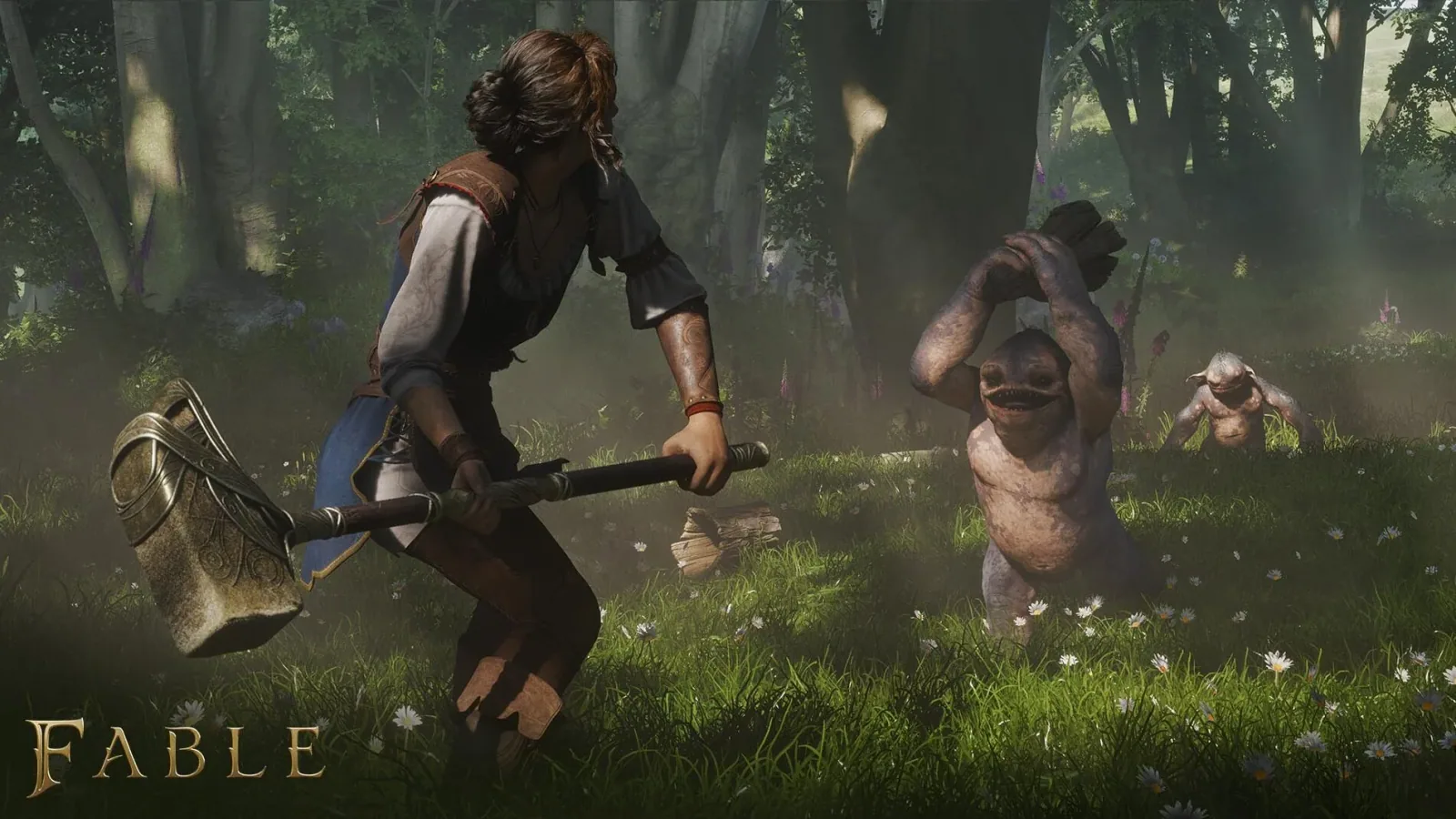
Fable delayed is no longer a rumour: on 29 May 2026, Microsoft and Playground Games confirmed that the anticipated RPG will no longer launch in 2026 and has been rescheduled for February 2027. In this guide I break down what was actually announced, why Xbox pulled out of a crowded year-end window, and what launch timing lesson any business investing in paid traffic can take from this decision.
TL;DR
- Fable delayed: the franchise reboot has moved from the autumn/end-of-2026 window and now arrives in February 2027.
- Confirmed platforms: Xbox Series X|S, PC (Windows) and PlayStation 5, with Game Pass on day one.
- The official reason is to give the game a "dedicated moment" and more development time, away from a crowded launch window.
- Microsoft aims to avoid an end of 2026 with GTA 6, Gears of War: E-Day and Call of Duty: Modern Warfare 4.
- The decision is a practical case of launch window — and it applies to games, products and paid campaigns.
Fable delayed to February 2027: what Microsoft confirmed
The news came straight from the official Xbox channel: the long-awaited Fable has been delayed from 2026 to February 2027. The announcement, made on 29 May 2026, ends months of speculation about a date that had never been precisely set — Microsoft had been saying "2026" since 2024, without a specific month.
Three points were confirmed at once:
- New date: February 2027, with no exact day announced yet.
- Platforms: Xbox Series X|S, PC via Windows and, for the first time officially, PlayStation 5 — a reflection of the multiplatform strategy Xbox has been expanding.
- Game Pass: the game will be in the catalogue on launch day, maintaining Microsoft's day-one release policy.
For those who have followed the franchise since the original Xbox days, the Fable delayed news sounds frustrating but predictable. This is a project that was revealed in 2020 and has spent years in development under Playground Games. Pushing it back a few more months, in this context, is less a sign of panic and more a calendar calculation.
Why Microsoft decided to delay Fable
The official argument is short: to give the game "the dedicated moment it deserves". Translating from corporate speak, it means two concrete things.
More development time
Fable is a complete reboot of the franchise, built on a new engine (ForzaTech, adapted from the Forza Horizon series, Playground's speciality). Ambitious open-world RPG reboots rarely suffer from too much time. Delaying to February 2027 buys extra months of polish — and reduces the risk of a buggy launch that would make headlines for the wrong reasons.
Escaping an overcrowded window
The second reason is pure positioning. The end of 2026 promises to be one of the most competitive periods in recent gaming history. Xbox itself has Gears of War: E-Day on the radar, while the entire market is organising around two giants: Grand Theft Auto 6 from Rockstar, and Call of Duty: Modern Warfare 4.
Launching a single-player RPG in the middle of that hurricane would mean competing for attention, press coverage and players' wallets against franchises that move billions. The Fable delayed to February breathes in a traditionally quieter quarter, where it has room to be the big name of the month.
The launch calendar Microsoft wanted to avoid
Understanding the decision is easier when you look at who occupies the window Xbox abandoned. The table below summarises the heavyweights that would make the end of 2026 hostile for a new release:
| Title | Publisher | Why it weighs on the window |
|---|---|---|
| Grand Theft Auto 6 | Rockstar Games | Biggest launch in the industry; consumes coverage and player budgets |
| Call of Duty: Modern Warfare 4 | Activision | Annual franchise that dominates year-end and multiplayer |
| Gears of War: E-Day | Xbox Game Studios | Internal competitor from Microsoft itself for Xbox audience attention |
When three titles of this calibre concentrate in the same quarter, any smaller release becomes noise. The reasoning behind the Fable delayed is the same that guides good media management: don't fight for attention in an auction where you can't afford the highest bid.
What to expect from the game: Playground Games and the Fable reboot
It's worth remembering who is behind the project. Playground Games is the British studio that built the Forza Horizon series, a benchmark in open worlds, technical performance and art direction. Fable is the studio's first venture outside the racing genre — a big bet, with an RPG team assembled specifically for it.
The promise is a fantasy world with the characteristic British humour of the franchise, freedom of choice and consequences, and the visual fidelity that ForzaTech has already demonstrated. With the Fable delayed, Playground gains breathing room to deliver all of this without the pressure of a year-end schedule.
If you want to gauge the size of Microsoft's bet on hardware and exclusives, it helps to look at how the console market is moving — something I analysed in the case of the Nintendo Switch 2 and NVIDIA's AI paradox.
What the delay means for fans and for Game Pass
For the player, the news has two sides. The bitter side is obvious: a few more months of waiting for an RPG announced back in 2020. The good side is less visible but more important — the real chance of receiving a finished game, not a rushed release that requires months of post-launch fixes.
For Game Pass subscribers, the impact on the wallet is practically nil. Since the Fable delayed remains confirmed for the catalogue on day one, no one needs to decide between buying now or waiting for a sale. You play when it arrives, in February 2027, at no extra cost beyond the subscription you already pay. This changes the emotional equation of the delay: frustration exists, but financial loss does not.
There is also a market effect. By moving the game to a calmer quarter, Microsoft increases the chance that Game Pass will gain new subscribers at the start of 2027 — precisely when there are few big releases to drive sign-ups. The delay, seen from this angle, is also a subscriber retention and acquisition play.
The launch timing lesson for those investing in paid traffic
Here the subject leaves gaming behind. I have worked for over 15 years with digital solutions and paid traffic management, and the decision behind the Fable delayed is exactly the kind of calculation I repeat with clients every week: the date of your launch is worth as much as the product.
Microsoft has a marketing budget that few companies in the world can match. Even so, it chose not to compete head-on. The reading is straightforward: when the cost of getting attention skyrockets because everyone is advertising at the same time, retreating is cheaper than insisting.
In paid traffic, this appears literally. In windows like Black Friday, CPM (cost per thousand impressions) and CPC (cost per click) rise because competition for the ad auction explodes. Launching a new offer at the peak of the auction means paying a premium for each click and still competing for the attention of a promotion-saturated audience.
I do this calculation with clients all the time. An advertiser who normally pays £20 CPM may see that value double or triple in Black Friday week — not because the ad got worse, but because ten competitors are fighting for the same space in the feed. If the campaign doesn't have a strong enough offer to justify that extra cost, the return on investment plummets. It was exactly this kind of reading that led Microsoft to take the team off the field: better to launch when the attention auction is cheap than to burn budget fighting for the year's most expensive bid.
Launch window: how to apply Microsoft's reasoning to your business
The good news is that this logic doesn't require a giant's budget. Any business can apply the same window reasoning when planning a launch or campaign. Here's how to do it in practice:
- Map the calendar competition. Before setting a date, list what the big players in your niche have already announced for the period. Holidays and industry events inflate the ad auction.
- Calculate the cost of attention. If the historical CPM in your niche doubles in a given month, ask whether the sales gain compensates for the extra acquisition cost.
- Look for the "empty" quarter. Just as February is calmer for games, every segment has months of low competition where the same budget delivers more reach.
- Ensure the product before the rush. Delaying to deliver something polished almost always costs less than putting out reputation fires after a botched launch.
When NOT to delay
Delaying is not a universal rule. It doesn't make sense to push the date when:
- The delay burns cash without reducing real quality risk.
- There is a genuine seasonal window (a Christmas product launched in February loses its point).
- The competitor will occupy the space anyway and the first-mover advantage outweighs the auction cost.
The secret is to distinguish fleeing an expensive fight from fleeing every fight. Microsoft did the former; the latter would be strategic cowardice.
Common mistakes when choosing a launch date
After many projects, I see the same pitfalls repeating — both in games and in e-commerce and SaaS campaigns:
- Setting a date before validating the product. A public commitment to a tight deadline is the recipe for a buggy launch.
- Ignoring the competitor's calendar. Those who don't research the window end up launching on the same day as the industry giant.
- Confusing movement with progress. Launching fast to "not miss the moment" usually costs more than waiting for the right window.
- Treating the date as an operational detail. The date is a strategic marketing decision, not a field to fill in at the end of the project.
This care with timing applies to any technology product. It's the same kind of market reading I applied when analysing the iPhone 18 launch and the A20 Pro chip, where the announcement window also defines how much of the public's attention the brand can capture.
Conclusion: calculated patience beats haste
The Fable delayed to February 2027 frustrates fans in the short term, but it's a textbook move: swapping an expensive, contested window for a quarter where the game can shine alone, with more polishing time along the way. It's not weakness — it's market reading.
If you are planning a launch or a campaign, take Microsoft's question to your table: is it worth competing now, or is there a better window just ahead? Map the calendar, calculate the cost of attention, and only then set the date. If you want help planning the window and paid media for your next launch, the team at Agathas Web is available to talk.
Sources: GameSpot, Game Informer and Wikipedia.
Related posts
ERP & WhatsApp Integration for UK Businesses: Architecture, Costs, and Common Pitfalls
Payment reminders, VAT invoices, and order confirmations sent directly from your ERP to customer WhatsApp: the scalable architecture and true costs for UK firms.

Managed Hosting vs. VPS: Who's on Call When Your Website Fails?
Your website crashed at 2 AM. With a VPS, it's your problem; with managed hosting, it's a team's. See the real division of responsibility and cost for each.

Two-Factor Authentication for UK SMEs: Your Baseline Security
Leaked passwords are the most common entry point for cyberattacks. Discover which accounts to protect first, the best authentication factors, and the typical costs for UK businesses.