Intel and Apple: The Chip Deal That Reshaped the AI Landscape in 2026
Intel surges, SpaceX falls for a third session, and Apple becomes a key player in the AI chip race. Here's what changed and why it matters for UK businesses.
by Cleverson Gouvêa
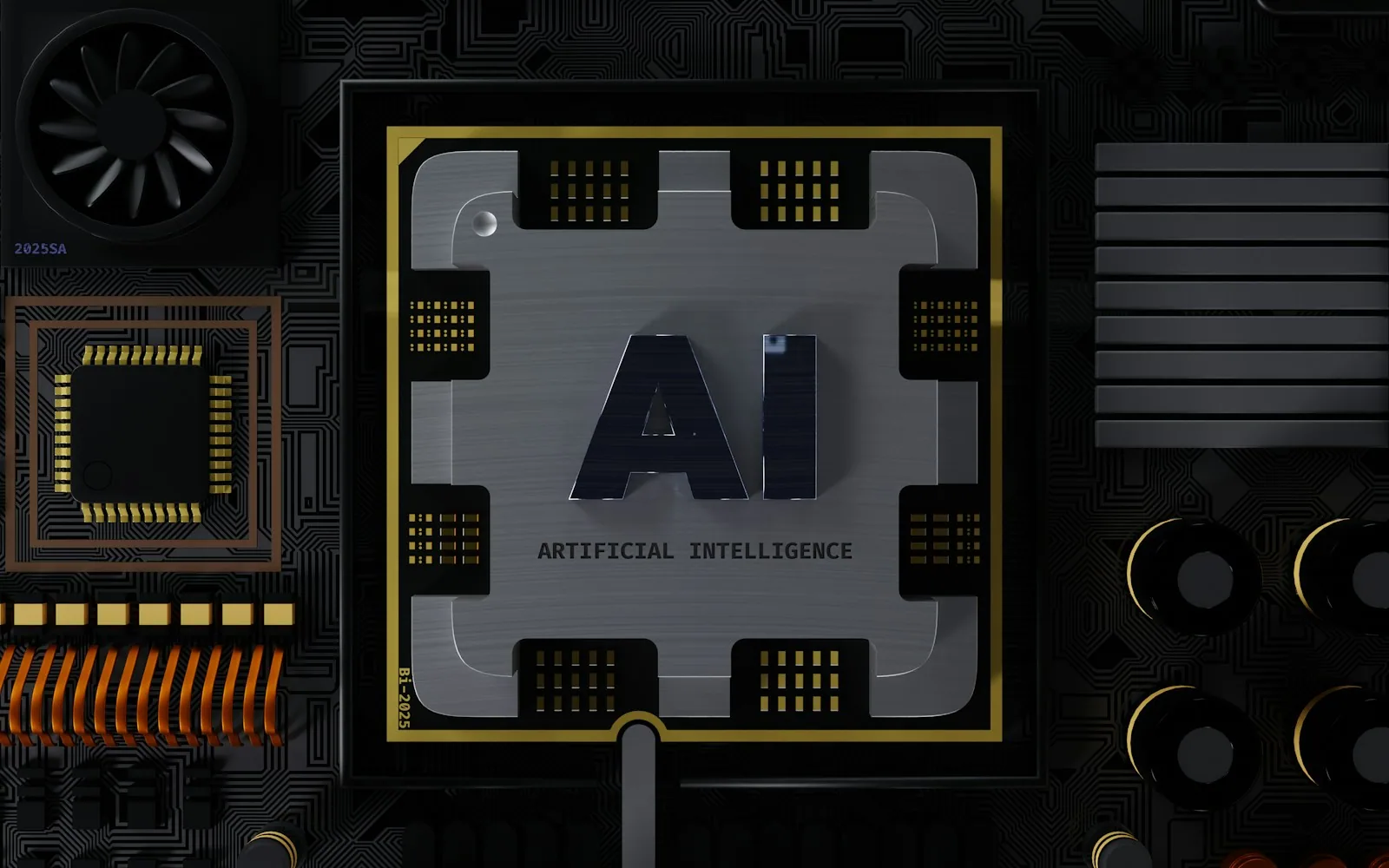
The partnership between Intel and Apple dominated financial news in June 2026 and shook the entire tech market. While Intel's stock soared to an all-time high, newly listed SpaceX fell for a third consecutive session. Two opposite moves, one common root: the billion-dollar race to manufacture the chips that power artificial intelligence.
TL;DR
- On 18 June 2026, Trump announced that Apple would work with Intel to design and manufacture chips in the US.
- Intel's stock (INTC) jumped about 9% in pre-market trading and closed at a record, accumulating a 464% gain over 12 months.
- SpaceX (SPCX) fell for a third straight session after its record IPO, but still held a significant gain over its debut price.
- Nvidia and the TerraFab project, linked to Elon Musk, also emerged as potential customers for Intel's foundry.
- Neither Apple nor Intel officially confirmed the deal — a note of caution for investors.
What Trump announced about Intel and Apple
On 18 June 2026, US President Donald Trump posted on Truth Social that "finally, Apple has agreed to work with Intel to design and build its chips in America." The short statement was enough to ignite trading.
The market read it directly: if the iPhone maker shifts some of its processor production to Intel's fabs on US soil, Intel gains an anchor client the size of Apple — validating the company's riskiest bet in a decade.
A word of caution from the start: as of that day's close, neither Apple nor Intel had publicly confirmed the details. According to the Wall Street Journal, the two companies had reached a preliminary understanding in May 2026 after more than a year of talks. A political announcement and a signed contract are not the same thing — and serious investors know that.
Why Intel's stock surged
The market reacted with euphoria. Intel's stock (ticker INTC) rose about 9% in pre-market, hitting $131.60, and closed at a record near $134. To grasp the scale, consider these numbers.
| Metric | Value |
|---|---|
| INTC pre-market gain | ~9% |
| Record closing price | ~$134 |
| 12-month appreciation | 464% |
| Approximate market cap | $608 billion |
| US government stake | ~10% (acquired in 2025) |
The key factor is the CEO. Since Lip-Bu Tan took the helm in early 2025, Intel has pursued a clear strategy: open its fabs to external customers in a foundry model that Taiwanese TSMC dominated. Instead of making only its own chips, Intel now sells manufacturing services to third parties.
This pivot requires billions in investment and, crucially, large clients to justify the risk. That's where Apple's name provides the missing credibility. The US government's roughly 10% stake, acquired in 2025, underscores the strategic importance — Washington sees Intel as a matter of national security, not just a tech company.
SpaceX falls for a third session: the other side of the coin
In the same market environment, SpaceX's story went the other way. After a record IPO — with a debut price of $135 per share and a rally of nearly 50% in the first days — Elon Musk's company strung together three consecutive losing sessions.
Before anyone reads this as a collapse: even after the negative streak, SpaceX still held a gain of more than 40% over its IPO price and ranked among the world's most valuable companies, with a market cap around $2.5 trillion. The decline was partly due to profit-taking and a broad market dip — the S&P 500 fell 1.2% and the Nasdaq 100 dropped 1% on the same day.
A technical detail explains the volatility: SpaceX went public with a free float of just 4.2%. With so few shares trading, any buying or selling flow moves the price disproportionately. Unsurprisingly, SpaceX options became the third most traded asset in the US market, behind only Tesla and Nvidia.
What connects the two
Intel rising and SpaceX falling on the same day seems contradictory, but it tells the same story from different angles: money rotating within the tech sector. Capital moved from already highly valued (and volatile) positions like SpaceX into a turnaround thesis with a concrete political catalyst — Intel. It's portfolio rotation, not the end of a cycle.
TerraFab, Nvidia, and the US chip race
The Intel-Apple announcement didn't come alone. Trump also claimed that Nvidia had agreed to produce advanced chips through Intel and mentioned the TerraFab project, linked to Elon Musk, as another potential customer for US fabs.
If these three names — Apple, Nvidia, and the Musk ecosystem — truly anchor Intel's foundry operation, the strategic picture becomes clear:
- Apple reduces dependence on Taiwan and gains a domestic supplier.
- Nvidia secures additional capacity for AI chips in a time of chronic shortage.
- TerraFab/Musk enters as a long-term customer in a US capacity project.
- Intel turns idle fabs into recurring revenue and spreads investment risk.
The backdrop is insatiable demand for AI infrastructure. The PHLX Semiconductor Index was already up about 90% for the year, signalling that the market sees chipmakers as the true owners of the infrastructure behind every language model and data centre. If you read our analysis on Huawei's AI chips and the arrival of cloud in Brazil, you'll understand that semiconductor sovereignty has become a geopolitical issue, not just a technical one.
The risk of concentration in Taiwan and TSMC
Why would Apple, which has always relied on TSMC, make room for Intel? The answer is one word: concentration. Today, the vast majority of cutting-edge chips — the same ones that power the A20 Pro in iPhones and Nvidia's GPUs — come from TSMC's fabs in Taiwan.
That's a dangerous geographic dependency. Tensions in the region, logistical risks, and US political pressure for domestic production are pushing giants to seek a second supplier. For Apple, having a US-based alternative means resilience: if something goes wrong in Taiwan, the production line doesn't stop completely.
Here, a dose of technical realism is needed. Manufacturing cutting-edge chips isn't like flipping a switch. It requires years of process calibration, competitive yield, and maturity that TSMC took decades to achieve. Intel may win the contract and the political announcement, but delivering volume with quality is another — much longer — step. For those following Apple's own chip roadmap, it's worth revisiting what we know about the 2nm A20 Pro chip in the iPhone 18: the manufacturing bar Apple sets is extremely high.
Intel vs SpaceX: two moves, one comparative picture
To organise what happened, here's a side-by-side comparison:
| Metric | Intel (INTC) | SpaceX (SPCX) |
|---|---|---|
| Period move | Up (~9% pre-market, record close) | Down for 3rd consecutive session |
| Main trigger | Announcement of Apple deal | Profit-taking after IPO |
| Recent cumulative | +464% in 12 months | +40% above $135 IPO price |
| Key risk | Executing the foundry in practice | Low free float (4.2%) and volatility |
| Role in AI thesis | Chip manufacturer (infrastructure) | Connectivity and capacity (Musk) |
The table highlights the contrast: one asset reacts to a future revenue catalyst; the other catches its breath after an euphoric debut. Neither invalidates the broader AI thesis — both are chapters of it.
What this means for UK businesses building with AI
You may not be trading on Wall Street, so why does this matter for your company? Because the price and availability of compute capacity determine the cost of everything that runs on AI — from a customer service chatbot to a lead-qualifying agent.
Three practical implications for the UK market:
- Inference costs. More chip fabs mean, in the medium term, more GPU supply and potential price relief for running models. Today, scarcity drives up costs.
- Risk diversification. Companies that rely on a single cloud or a single AI supplier should think like Apple: having a Plan B reduces fragility.
- Adoption speed. The cheaper and more abundant the infrastructure, the faster AI features reach everyday products.
This is the backdrop that makes AI agents increasingly viable for businesses: the infrastructure supporting those agents is literally being built now — in Oregon, Arizona, and perhaps with Apple's name on the contract. In practice, today's chip war sets the price of tomorrow's automation.
Risks and what remains unconfirmed
No honest analysis ends without the asterisks. After more than 15 years tracking tech cycles, I've learned to be wary of headlines that sound too good. A few points warrant caution:
- The deal was not confirmed by the companies. The announcement came from a political post, not a joint official statement from Apple and Intel.
- Executing is different from announcing. Delivering cutting-edge chips in volume with good yield can take years.
- Volatility is the rule, not the exception. Both Intel's rally and SpaceX's decline could reverse quickly — low free float amplifies both directions.
- Investment decisions require due diligence. Nothing here is a buy or sell recommendation; it's a reading of the tech landscape.
The aim of this article is not to predict stock prices, but to explain why the AI chip board moved — and what that reveals about the infrastructure underpinning the next decade of software.
Conclusion: the game is infrastructure
The moves of Intel and Apple and SpaceX's decline on the same day tell the same truth from opposite angles: artificial intelligence doesn't live on brilliant models alone — it depends on who manufactures the silicon. In 2026, winning this race has become a matter of corporate strategy and national sovereignty at once.
For UK businesses, the lesson is less about buying shares and more about understanding the foundation: the cost of your automation tomorrow is being decided in chip fabs today. At Agathas Web, we help companies turn this infrastructure into real products — from customer service agents to AI integrations. If you want to get ahead of this cycle, get in touch and let's design the next step.
Related posts

AI Definition 2026: What UK Businesses Need to Know
Is your chatbot AI in the eyes of the law? Three 2026 regulations hinge on that answer—and most UK companies aren't ready.
Midjourney V8.2: AI Ad Creatives for UK Marketers in 2026
Draft mode, V8.2, commercial licence and the billion-dollar Hollywood lawsuit: a practical guide to Midjourney for anyone producing ad creatives.
Perplexity AI in 2026: Ready Your Website for AI Agents
Two August 2026 rulings change how AI agents read and use your website. Here's what to do now, in practice.