Cash Payments: New UK and EU Limits in 2026 and 2027
Spain, the EU, Mexico and Brazil are tightening rules on cash. See the 2026 limits and how your business should prepare for the digital shift.
by Cleverson Gouvêa
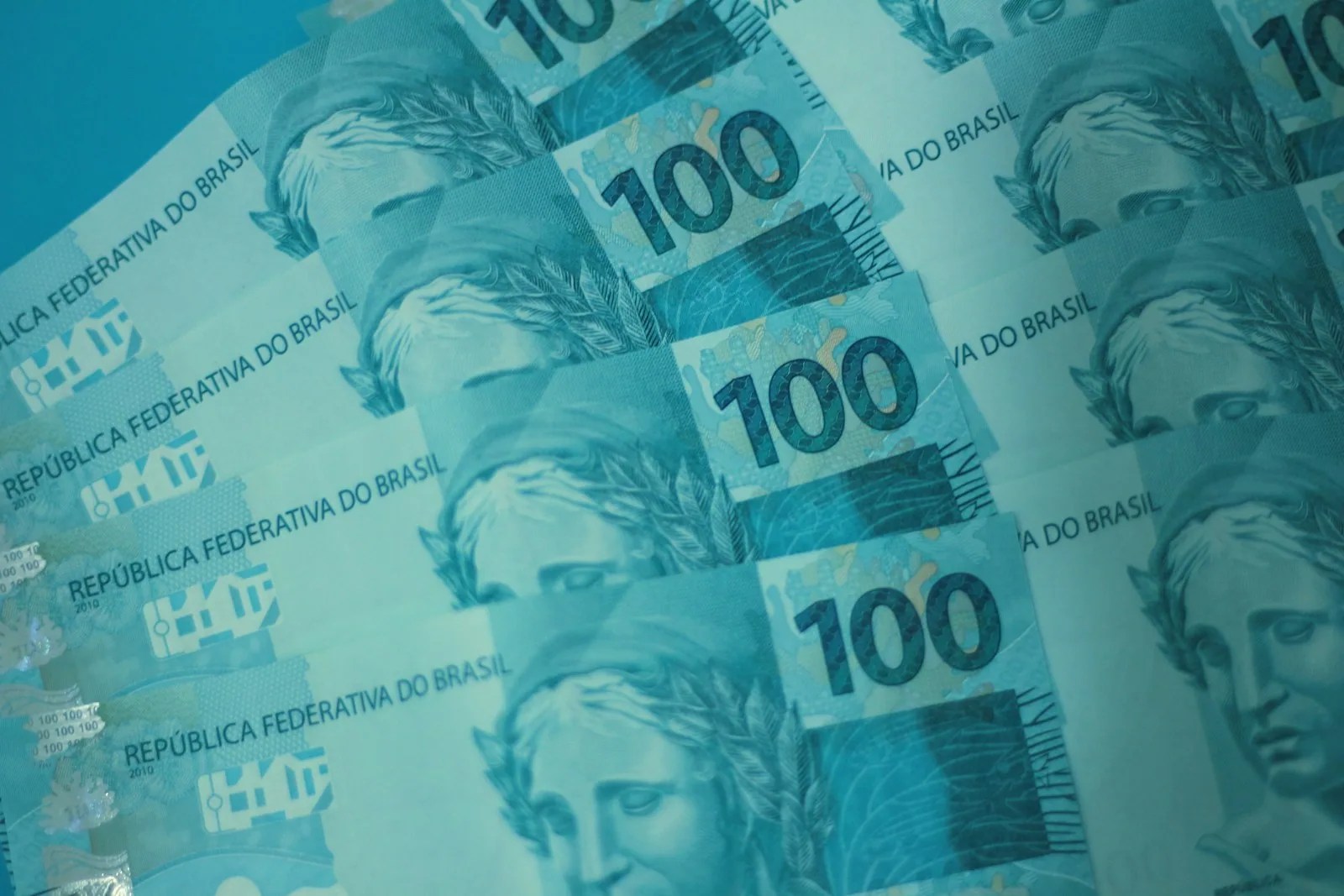
Cash payments have become one of the most searched topics in 2026 — and for good reason. Spain, the European Union, Mexico and Brazil are redrawing the rules on how much you can pay, receive or deposit in notes and coins. In this guide I break down what has changed in each place, why governments have tightened the screws, and what your business needs to do to avoid being caught out.
TL;DR
- In Spain, paying in cash above €1,000 between a business and a customer has been prohibited since Law 11/2021, with a fine of 25% on the excess.
- The European Union adopts a single ceiling of €10,000 for cash payments to businesses from 10 July 2027.
- In Mexico, the SAT is notified when cash deposits exceed 15,000 pesos per month in an account.
- In Brazil there is no legal limit, but cash transactions of R$30,000 or more trigger a DME declaration to the Federal Revenue.
- The direction is the same everywhere: cash is giving way to digital and traceable means.
What is happening with cash in 2026
Anyone following the searches has noticed a pattern. Terms like dinero en efectivo, cash payment limit and how much can I deposit without declaring have exploded in recent months. The reason is concrete: several countries have brought into force — or announced for the near future — rules that limit the use of notes and coins in everyday transactions.
This is not about banning cash. It is about traceability. Governments want to see where money goes, especially in large amounts, to combat tax evasion, corruption and money laundering. As a developer serving clients in the UK and abroad for over 15 years, I see the practical effect: businesses that still rely on cash need to review their processes before the fine arrives.
Below, I break down each country, with the rules already in force in 2026 and those coming into play in 2027. The message, you will notice, is the same everywhere: cash is losing ground.
Spain: the strictest limit in the eurozone
Spain currently has one of the toughest legislations on the continent. The basis is Law 11/2021, on the prevention and fight against tax fraud, fully in force in 2026.
The three thresholds you need to know
- €1,000 — when one of the parties acts as a business or professional. Above this, payment must be by transfer, card, debit or Bizum.
- €2,500 — in transactions between individuals, provided neither acts as a business.
- €10,000 — exception for non-resident foreign payers who do not act as professionals.
25% fine and the ban on splitting
The penalty is heavy: 25% on the amount exceeding the limit, and both the payer and the recipient are liable. Splitting the purchase into several tickets to stay under the threshold does not work — the law treats the transaction as a whole. There is, however, some relief: those who voluntarily report the irregularity to the Tax Agency may have the fine reduced or even cancelled.
European Union: single €10,000 ceiling from 2027
The biggest news that drove searches in June 2026 comes from Brussels. From 10 July 2027, the entire European Union will have a single ceiling of €10,000 for cash payments to businesses, resulting from Regulation (EU) 2024/1624, part of the new anti-money laundering package (AMLR).
What this means in practice:
- Above €10,000, the trader must not accept cash; the customer must use an identifiable means.
- For occasional transactions from €10,000, Customer Due Diligence (CDD) applies: verification of the customer's identity and collection of the data required by law.
- The limit applies to commercial transactions with businesses or professionals. Occasional deals between individuals, without professional activity, are outside the European ceiling.
Worth debunking the rumour circulating on social media: having €10,000 at home is not a crime, and the regulation does not confiscate savings. It only requires identification above the threshold in payments to businesses. The unification also ends the current patchwork, where each country had its own limit — some with no ceiling at all. From 2027, the floor will be the same from Lisbon to Helsinki.
Mexico: the SAT's 15,000 peso rule
Across the Atlantic, the topic dinero en efectivo also dominates searches — now because of the SAT (Servicio de Administración Tributaria). The most cited rule in 2026 is the 15,000 pesos threshold.
When cash deposits in an account total more than 15,000 pesos in a month, the bank is obliged to inform the SAT. Three important points clear up the confusion:
- It is not an automatic tax. Exceeding the amount does not generate an immediate charge.
- It is not a balance limit. You can have more than that in the account; the trigger is the cash deposit.
- Splitting does not help. Banks sum up the month's movements; several small deposits do not escape the report.
Exceeding 15,000 pesos is not illegal, but it attracts attention. The SAT may ask you to prove the origin of the money — and that request can come up to five years later. Therefore, keeping receipts for everything that comes in cash has gone from being prudent to being a necessity.
Brazil: no legal limit, but the DME spotlight
In Brazil the logic is different. There is no legal limit prohibiting cash payments above a certain amount. What exists is a transparency obligation: the DME — Declaration of Transactions Settled with Cash, created by IN RFB nº 1,761/2017.
The rule: individuals or legal entities that receive R$30,000 or more in cash from the same person, in the same month, must declare this to the Federal Revenue by the last working day of the following month. The objective is the same as in Europe — to close the net on tax evasion, corruption and money laundering.
And there is a Brazilian factor that accelerates everything: Pix. The instant payment system has become so dominant that cash is already a minority in much of commerce. In practice, Brazil has moved towards a digital economy by spontaneous adoption, without needing a ban — something few countries have managed to replicate.
Cash limits by country: comparison table
To visualise at a glance, I have compiled the main cash limits in force (or already announced) for 2026 and 2027:
| Country / Region | Limit or trigger | Rule that applies |
|---|---|---|
| Spain | €1,000 (with business) / €2,500 (between individuals) | Prohibition of payment above the ceiling; fine of 25% |
| European Union | €10,000 (from 10/07/2027) | Prohibition of cash payment to businesses above the ceiling |
| Mexico | 15,000 pesos/month | Bank reports cash deposits to SAT |
| Brazil | R$30,000/month (same person) | Obligation to declare (DME) to Federal Revenue |
Notice the difference in philosophy: Spain and the EU prohibit above the ceiling; Mexico and Brazil monitor and require declaration. The destination, however, converges to the same point.
Why governments are limiting cash
Cash has a characteristic that bothers tax authorities: it is anonymous. It leaves no trace, no ID, no log. That is why it has become the preferred channel for those wanting to hide resources.
The three central reasons behind the tightening:
- Anti-money laundering. Illicit funds often enter the formal economy via cash purchases, precisely to avoid identifying the beneficiary.
- Reducing tax evasion. Off-the-books sales disappear when payment must be traceable.
- Tax efficiency. Digital payments generate data that feeds automatic audits, without an inspector knocking on the door.
The UK's HMRC has similarly emphasised the importance of digital records to combat hidden income. The same logic drives Brussels and the SAT — three authorities, one diagnosis.
What changes for businesses and digital entrepreneurs
Here comes the point that matters most to those running a business. The shift to digital means is not just a legal requirement — it is a competitive opportunity.
Those selling to customers in Europe need to adapt now: accepting cash above the Spanish ceiling or, in 2027, the European ceiling, exposes the business to heavy fines. But the impact goes beyond compliance. Replacing cash with digital payments brings automatic reconciliation, fewer cash errors, less risk of theft, and valuable data on customer behaviour.
This data, by the way, is fuel for marketing. When every sale becomes a record, it is much easier to measure campaigns, remarketing and return on investment — a topic I detail in the guide on AI strategies for businesses at Google I/O 2026. And in customer service, digital channels like WhatsApp become the link between the sale and the traceable payment, as I show in the comparison between WhatsApp Business and the Official API.
How to prepare for the digital economy
If your operation still relies heavily on cash, now is the time to act. A practical roadmap I apply with clients:
- Map your exposure. How much of your turnover still comes in cash? Identify where the legal ceiling could catch you.
- Diversify payment methods. Bank transfer, card, payment links and digital wallets cover almost all scenarios.
- Automate reconciliation. Integrate receipts into your management system so that every sale generates a record without manual work.
- Train your team. The till staff need to know what can and cannot be accepted in cash, by country of operation.
- Use data to your advantage. Digital payment is data; data means better decisions. AI tools already turn this history into demand forecasting and customer service, as I explain in the article on AI agents for businesses.
Businesses that treat digitalisation as a project — not as a reaction to a fine — get ahead. The cost of anticipating is low; the cost of delaying grows with every new rule. In more than one migration I have led, the invisible gain was the most valuable: stopping closing the till in the dark and starting to see, in real time, where every pound comes from.
Conclusion: the future of money is traceable
The limit on cash is not a passing fad or a conspiracy theory: it is a global trend, with the force of law in Spain, a deadline in the European Union, and active oversight in Mexico and Brazil. Cash will not disappear tomorrow, but its space shrinks every year.
For businesses, the reading is simple: the sooner the operation is digital, the better — less legal risk, lower operational cost, and more intelligence about the business itself. If you want to structure digital payments, automation and end-to-end traceable customer service, talk to our team. The transition is simpler than it seems — and the clock is already ticking.
Related posts

Price Anchoring: What Santander's 8% Regular Saver Teaches Us About Offers
Santander launched a regular saver shouting 8% — but the effective return is half that. The price anchoring lesson behind the headline and how to apply it.

David Lloyd Leisure: How Buying Aspria Reshaped European Fitness
How David Lloyd Leisure turned a loss into profit and bought Aspria — and what the strategy teaches about customer acquisition and retention.

PlayStation Plus: What Sony's Statement Teaches UK Businesses
Sony no longer just sells consoles and games: it sells recurring subscriptions. Understand what the latest statement on PlayStation Plus reveals.