Oura Ring 5: The Smart Ring Gets a Health Radar in 2026
The Oura Ring 5 is 40% smaller, lasts up to 9 days on a charge, and introduces an AI platform that monitors blood pressure signals while you sleep. Find out if it's worth the upgrade.
by Cleverson Gouvêa
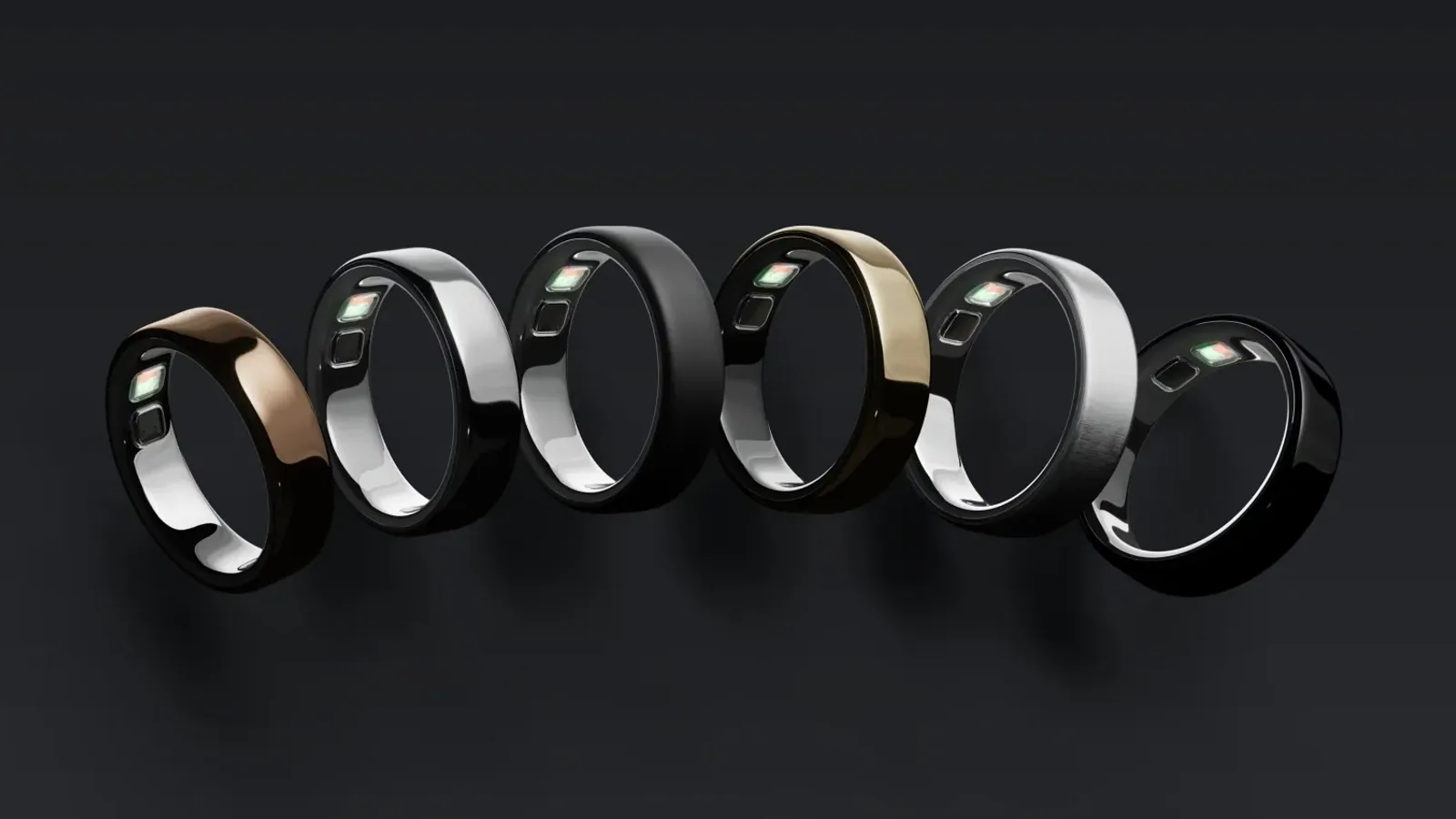
The Oura Ring 5 launched on 28 May 2026, promising the world's thinnest smart ring, up to nine days of battery life, and an artificial intelligence layer called Health Radar that tracks blood pressure signals while you sleep. In this guide, I break down point by point what's changed from the Ring 4, what Oura is betting on with clinical AI, and whether it makes sense to import the Oura Ring 5 to the UK now.
TL;DR
- The Oura Ring 5 was announced on 28 May 2026 and starts shipping on 4 June 2026.
- It is 40% smaller than the Ring 4, with a width of 6.09 mm and thickness of 2.28 mm, weighing from 2 g.
- Battery life of 6 to 9 days, water resistance to 100 m, and a reinforced PVD coating against scratches.
- New Health Radar: an AI platform with Blood Pressure Signals, Nighttime Breathing, and cardiovascular strain detection during sleep.
- Starting price: £399 (silver or black) and £499 for premium colours (Gold, Stealth, Brushed Silver, Deep Rose).
- In the UK, it's available directly from Oura or through retailers like John Lewis and Amazon UK, with prices ranging from £399 to £499 depending on the finish.
What is the Oura Ring 5 and why it matters
The Oura Ring 5 is the fifth-generation smart ring from Finnish company ŌURA Health Oy, the market leader in smart rings since 2015. Unlike a smartwatch, it has no screen — all biometric readings are done by optical sensors, temperature sensors, and an accelerometer, with data displayed in an app for iOS and Android.
Oura's proposition has always been to measure three pillars: sleep, readiness (recovery), and activity. What changes in the Ring 5 is not the essence but the clinical depth. The company has put over 40 in-house doctors and PhDs to build Health Radar, an AI layer that cross-references biometric patterns throughout the day to flag changes that may indicate cardiovascular stress, nocturnal respiratory changes, and trends outside each user's personal baseline.
This is the first time a consumer wearable the size of a ring offers a continuous blood pressure signal — even if as an indirect signal, not a substitute for an arm cuff. For anyone working in paid traffic, online customer service, or any routine that spikes cortisol all day, this is the kind of measurement that changes behaviour.
Design: 40% smaller — and what that means in real use
The first thing that stands out about the Oura Ring 5 is its size. Oura has cut 40% of the volume compared to the Ring 4. The official numbers:
- Width: 6.09 mm (vs. 7.9 mm on the Ring 4)
- Thickness: 2.28 mm (vs. 2.88 mm on the Ring 4)
- Weight: 2 g to 2.69 g, depending on ring size
- Sizes: 6 to 13 (US scale, same as before)
In practice, the Ring 5 is virtually invisible on the finger. Those who used previous models complained about discomfort when typing, holding a door handle, or sleeping face down. This model solves that. The finish is pure titanium on both inner and outer faces, with a reformulated PVD (Physical Vapor Deposition) coating that resists scratches better — the historical weak point of gold and rose gold versions.
Why size matters in a wearable
A health wearable only works if you wear it every day, including in bed. Smartwatches fail at this: they are heavy, heat up the wrist, and disturb sleep. The smaller the ring, the higher the adherence — and the greater the volume of longitudinal data the app can cross-reference. Oura is playing the right game here.
Health Radar: the AI platform that changes the game
This is the most important new feature and it ties into our series on AI agents in the real world. Health Radar runs in the background, continuously ingesting data on heart rate, HRV, skin temperature, SpO₂, and breathing patterns. When something deviates from the user's personal baseline, the app issues a contextual alert — not just "your HRV dropped", but something like "your HRV has been declining over the last 3 days along with elevated night-time temperature; consider resting or consulting a doctor".
Two capabilities launch the platform:
- Blood Pressure Signals — reading patterns consistent with increased blood pressure during sleep.
- Nighttime Breathing — a 30-day view of nocturnal breathing patterns, including signs of disordered breathing (apnoea).
Oura is transparent: the Ring 5 does not replace an arm sphygmomanometer. What it does is identify trends and flag when it's worth calibrating with a traditional device. To that end, the app accepts manual inputs from cuff measurements (Cuff Inputs), refining the model over time.
Where the AI really appears
The model behind Health Radar was trained on aggregated longitudinal data from millions of Oura users — over 100 million nights of sleep mapped, according to the company. It combines:
- Personalised anomaly detection (each person has their own baseline)
- Multi-sensor cross-referencing (HRV + temperature + SpO₂ + respiration)
- Contextual window (3 to 30 days)
- Actionable advice via partnership with Counsel Health for on-demand telemedicine in the US
It is not a generative model answering questions — it is a continuous clinical classifier. The difference from Gemini or GPT is fundamental: Health Radar almost never "speaks", but when it does, it is specific, cites the signal, and suggests action.
Blood Pressure Signals and Nighttime Breathing in detail
Blood pressure varies throughout the day. During sleep, it falls in a pattern called nocturnal dipping — those with reduced or absent dipping have higher cardiovascular risk. Oura uses this nocturnal window because physiological noise is lowest: you are still, supine, without caffeine, without acute stress. The algorithm identifies variability patterns that a cardiologist would read from a 24-hour Holter monitor, on a home scale.
Nighttime Breathing monitors respiratory amplitude and frequency. Persistent increases can indicate a cold starting, training overload, active allergies, or — in more serious cases — sleep-disordered breathing. The app shows a 30-day ruler so you can compare how you slept tonight against your average.
Both features become available in June 2026, initially in the English-language app for users in the United States, India, and the United Arab Emirates. Oura has signalled progressive expansion but has not confirmed a UK launch date.
Battery, materials and durability
The battery is another quiet improvement. The Ring 5 delivers 6 to 9 days per charge, depending on how much you use connected GPS and continuous SpO₂ readings. The Ring 4 managed 5 to 8 days. It doesn't seem like much, but in daily use it means charging the ring once a week instead of twice — and that changes your relationship with the device.
The table below summarises the differences between the Ring 4 and Ring 5:
| Spec | Oura Ring 4 | Oura Ring 5 |
|---|---|---|
| Width | 7.9 mm | 6.09 mm |
| Thickness | 2.88 mm | 2.28 mm |
| Weight | 3.3 to 5.2 g | 2 to 2.69 g |
| Battery | 5 to 8 days | 6 to 9 days |
| Water resistance | 100 m | 100 m |
| Material | Titanium + PVD | Titanium + reinforced PVD |
| Health Radar | No | Yes |
| Starting price (£) | 349 | 399 |
The charger has also been redesigned: it is now a compact USB-C base, without the vertical pedestal of the model 4. Full charge takes about 80 minutes.
Prices, colours and availability
The Oura Ring 5 comes in six finishes:
- Silver — £399
- Black — £399
- Brushed Silver — £499
- Gold (warmer tone than previous) — £499
- Stealth (matte black) — £499
- Deep Rose (replaces Rose Gold, with a more copper tone) — £499
The entry price has risen £50 compared to the Ring 4. In euros, the ring starts at €429, and in US dollars at $399. As with previous models, you need to subscribe to Oura Membership at £4.99/month to get full access to reports — including Health Radar.
For users of the Ring Gen3 and Gen4, the good news is that many software features (live activity tracking, GLP-1 journey, Brain Health Study) also roll out to those models via app updates. What does not come to older models is the Health Radar with Blood Pressure Signals — that depends on the more powerful LED sensors that only the Ring 5 has.
Oura Ring 5 vs Galaxy Ring vs Apple Watch: does it make sense for you?
The decision depends less on Oura and more on what you want to measure. Short comparison:
- Galaxy Ring (Samsung) — competing ring launched in 2025, around £349 in the UK, integrated with Samsung Health. Cheaper and no subscription, but without Oura's algorithmic sophistication. I cover Samsung's strategy in detail in One UI 8.5: Samsung's AI news in 2026.
- Apple Watch Series 11 — has ECG, fall detection, built-in GPS, and a screen. But it's heavy on the wrist, sleeps poorly, and lasts 18 to 36 hours on battery. For sleep and recovery, the ring wins.
- Whoop 5.0 — screenless band, athlete-focused, expensive subscription, and sleep feedback nowhere near Oura's quality.
A good practical criterion:
- If you want to measure sleep and recovery with clinical seriousness, the Oura Ring 5 wins.
- If you want notifications, GPS, and workout metrics, stick with Apple Watch or Galaxy Watch.
- If you want a cheap ring to start, the Galaxy Ring does the job.
How to buy in the UK and what to expect from prices here
Oura has an official UK store at oura.com, and the ring is also available through retailers such as John Lewis, Amazon UK, and Very. Prices range from £399 to £499 depending on the finish. There are no additional import duties since it's sold within the UK.
The Oura Membership subscription works globally, so there is no regulatory barrier — just pay with your card. The app is partially available in English (UK); some clinical report sections remain in English.
For companies considering employee health programmes, Oura for Business is worth looking into: Oura runs a B2B programme with volume discounts and an anonymous aggregated dashboard. A good tool for HR departments structuring data-driven wellness initiatives — especially those already managing paid traffic for internal health campaigns.
Conclusion: is it worth upgrading?
If you are on the Ring 3 or Ring 4, the upgrade is mainly worth it for two reasons: the reduced size (which changes the daily experience) and the Health Radar with blood pressure. The extra battery and more resistant coating are bonuses. If you are on any model before the Ring 3, it is practically a different device.
For those who have never owned an Oura, the Ring 5 is the most mature point of the product. The combination of nearly invisible hardware with useful clinical AI is what sets the Oura apart from any Mi Band — and justifies the £399 price tag plus the monthly fee. The total first-year cost in the UK is around £399 to £499 for the ring plus £59.88 for the membership. It is expensive, but it is the best sleep and recovery wearable on the market in 2026.
My practical recommendation: if you already work in health, sports performance, or have a family history of cardiovascular issues, it is a defensible investment. If you just want to "see how many steps you took", any £30 fitness band will do.
Sources: Oura Health Press Release (BusinessWire){target="_blank"} · TechCrunch — Oura Ring 5 announcement{target="_blank"} · Android Central — Oura Ring 5 hands-on{target="_blank"} · CNBC — Oura shrinks wearable by 40%{target="_blank"}
Related posts
Safeguarding Your Web Server: WAF, fail2ban, and Rate Limiting Explained
94% of logins on Cloudflare's network are bots. Discover how WAF, rate limiting, and fail2ban can thwart attacks before they bring down your website.
Linux Server Hardening: Essential Checklist for UK Web Servers
Is your website running on its own VPS with no sysadmin on staff? This checklist covers the steps we apply to every inherited server, including common pitfalls that can lock you out.

Cobuccio Tecnologia: The UK Business Case for In-House IT
A data processor worth £1 million in Monte Belo (MG), Brazil, helps explain the most expensive IT decision a UK business might face in 2026.