Lloyds Bank Outage: A Digital Resilience Wake-Up Call for UK Businesses
The Lloyds Bank outage knocked 26 million customers offline and exposed failures every software company should avoid. Here's what to learn.
by Cleverson Gouvêa
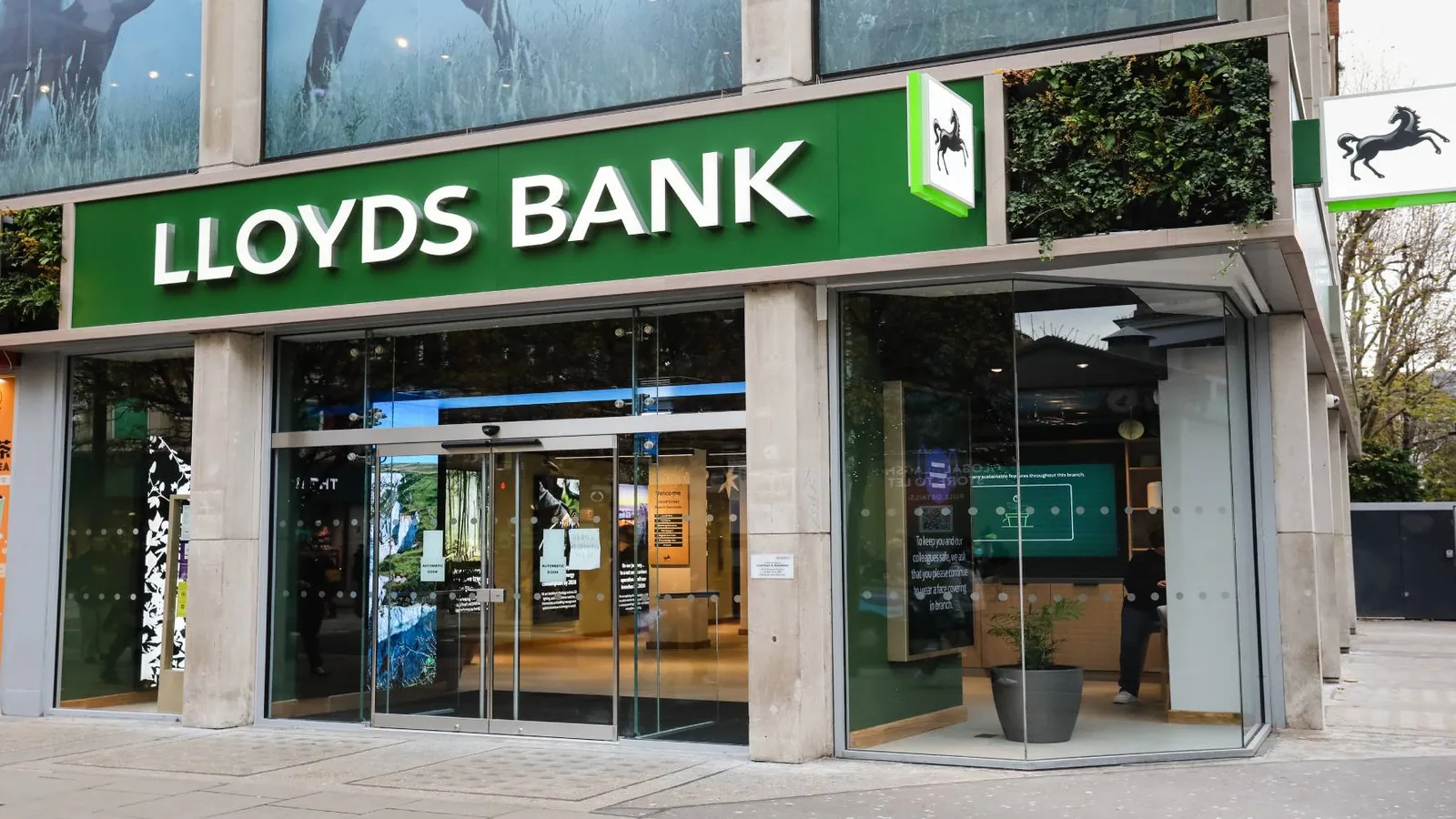
The Lloyds Bank outage on Wednesday, 3 June 2026, left around 26 million customers unable to access accounts, make transfers, or complete payments in the middle of the day. It wasn't an isolated incident: it's the second major failure for the group in the same year. In this article, I dissect what happened, why three banks went down simultaneously, and what your business needs to learn from a collapse of this magnitude.
TL;DR
- The Lloyds Bank outage began shortly after 11:00 BST and took down the app and internet banking for Lloyds, Halifax, Bank of Scotland, Scottish Widows, and MBNA.
- The five banks share the same digital infrastructure — hence they fell together. It's the classic single point of failure.
- This was the second major failure of 2026: on 12 March, a defect in an overnight update exposed data of up to 447,000 customers.
- The lesson isn't too technical for your business: redundancy, AI-driven observability, controlled deployment, and a communication plan apply to any company that relies on software.
What happened in the Lloyds Bank outage
The problem appeared just after 11:00 BST and escalated quickly. Downdetector, the platform that tracks real-time instability reports, began recording spikes around 11:15, with reports concentrated in London, Belfast, and Cardiff, and heavy volumes also in Liverpool, Newcastle, Birmingham, and Manchester.
Customers reported being unable to log into the app, make transfers, check statements, or pay for items in supermarkets, cafés, and restaurants. The British press summed up the chaos with one phrase: people who couldn't even buy their lunch. For those who use their phone as a wallet, a bank going down at peak time is exactly that — money that exists in the account but doesn't work in your hand.
The group acknowledged the fault and apologised publicly: "We know some customers are having problems with the app and internet banking. We're very sorry. We're working hard to fix it and will let you know as soon as everything is back to normal." Services were only restored late in the afternoon. You can follow the incident history on the Lloyds official status page.
Why Lloyds, Halifax, and Bank of Scotland fell together
At first glance, it seems odd that three different brands would stop at the same minute. The explanation is simple: Lloyds, Halifax, and Bank of Scotland belong to the Lloyds Banking Group and run on the same digital infrastructure and the same servers. When the shared core fails, all the brands that depend on it cascade down.
This is what we call in architecture a single point of failure (SPOF): a component on which everything depends and whose failure brings down the entire system. Consolidating brands on a common platform reduces cost and simplifies operations — but it concentrates risk. Without genuine isolation and redundancy, the cost saving becomes fragility the day the core stumbles.
The recurrence: from the March data breach to the June outage
What makes this episode more serious is the track record. The June outage is the second serious technology failure for the group in 2026. On 12 March, a software defect introduced in an overnight update broke the way the app associated user sessions with data — and customers who logged in at the same time briefly saw other people's information.
What was exposed in the data breach
The damage was sensitive: up to 447,000 customers affected, with over 114,000 actively viewing data that wasn't theirs. Exposed data included transactions, sort code, account number, and even National Insurance numbers. The group said it found no evidence of fraud and paid around £139,000 in compensation for distress. Note the pattern linking the two incidents: in both, a software change went into production and the system had no safety net to contain the error before it reached the end customer.
| Incident | Date | Root cause | Impact | Resolution |
|---|---|---|---|---|
| Data breach | 12 Mar 2026 | Defect in overnight update; incorrect session mapping | Up to 447,000 customers; 114,000 saw others' data | Quick fix + £139,000 compensation |
| Service outage | 3 Jun 2026 | Shared infrastructure failure | ~26 million without app/payments for hours | Restored late afternoon |
Two incidents, two different causes, one common denominator: critical software without sufficient safety margin. And the biggest cost doesn't always show up on the balance sheet — it shows up in trust.
Single point of failure: the architectural mistake that costs dearly
In over 15 years managing infrastructure for critical distance learning environments, I've learned a hard rule: everything that can fail will fail — the question is whether you designed the system to survive it. An SPOF is the opposite. It's betting that the central component will never go down.
The defence against SPOF has a name: redundancy. In practice, this means:
- Replication: more than one instance of each critical service, in different zones or regions, so that the failure of one doesn't bring down the whole.
- Failure isolation: brands and services that don't need to share the same fate shouldn't share the same core without bulkheads.
- Automatic failover: when one node fails, traffic flows to another without manual intervention.
- Graceful degradation: if payments go down, the customer should at least be able to see their balance — instead of a white screen.
None of this is exclusive to banks. An e-commerce site, an EAD platform, or a SaaS business suffers the same malady when they concentrate everything on a single server, database, or provider.
Observability and AIOps: how AI anticipates collapse
Here's the point that interests me most today: most major outages aren't sudden. They give signals — latency rising, request queue growing, error rate deviating from the curve — minutes or hours before the collapse. The problem is that no one was looking at the right chart at the right time.
It's precisely this gap that observability with artificial intelligence fills. The buzzword is AIOps: using AI to correlate metrics, logs, and traces in real time, detect anomalies before they become incidents, and point to the likely cause without the team frantically searching dozens of dashboards in the middle of a crisis.
From Downdetector to your own alert
In practice, an anomaly detection system learns the normal behaviour of each service and fires an alert when something deviates from the pattern — even if no fixed threshold has been breached. It's the difference between discovering the problem via Downdetector (i.e., from furious customers) and discovering it via your own monitoring, before the damage. For those structuring this, it's worth understanding how AI agents already operate in day-to-day business — the same intelligent automation logic that drives customer service also drives infrastructure operations.
Changes that break production: the risk of overnight deployment
Go back to the March data breach. The root cause was a defect introduced in an overnight update. That's not a detail — it's a pattern that repeats in incidents worldwide. The "deploy in the dead of night so no one notices" is one of the most dangerous practices still surviving in the industry.
The antidote in four steps
The path to not repeating March's mistake is delivery maturity:
- Progressive deployment (canary): release the change to 1% of users, observe, then expand. If it breaks, it breaks for few people.
- Feature flags: turn off a problematic feature in seconds, without needing a new urgent deployment.
- Instant rollback: having the tested and documented way back is as important as the way forward.
- Faithful staging environment: session mapping bugs like Lloyds' appear under concurrency — test with load, not just one user.
I've personally stopped deployments because resource contention in the build would bring down the environment — I preferred to delay an hour rather than publish a broken BUILD_ID to production. Delivery discipline isn't bureaucracy: it's what separates an internal scare from a national headline. Each of the four steps above exists because of an incident someone, somewhere, would rather not have lived through.
Continuity of service when the system goes down
There's a detail almost no one plans for: what happens to customer service when the main system goes down? On the day of the Lloyds Bank outage, millions tried to contact the bank at the same time. When the official channel goes down with the service, frustration turns into customer churn.
The answer is to separate the communication channel from the system that failed. A public status page (independent of your main infrastructure) and an automated messaging channel can absorb the initial impact: let customers know the team is aware, provide an estimate, and reduce the volume of repeated contacts. I've written in detail about what to do when an essential service goes offline — the crisis communication logic is the same, whether it's a bank or a messaging app.
It's also worth remembering that security incidents and availability incidents require different responses. In cases of data breaches, like other recent episodes I've covered about hacks and exposed data, communicating with transparency and speed is part of mitigation, not an optional extra.
Digital resilience checklist for UK businesses
You don't need 26 million customers to benefit from the lessons of the Lloyds Bank outage. Use this list as a starting point:
- Map your SPOFs: list every component whose failure brings down the system. Start eliminating the most critical.
- Implement redundancy where it hurts: database, authentication, and payments first.
- Monitor with anomaly detection: discover the problem before the customer does.
- Adopt progressive deployment and feature flags: never "all or nothing" in production again.
- Test under real load: concurrency bugs only appear with concurrency.
- Have a status page and communication plan: separate from the main infrastructure.
- Document and rehearse rollback: the way back must be tested before the emergency.
- Treat data as a liability: the less sensitive data exposed on the surface, the smaller the damage from a breach.
Conclusion: trust is lost in minutes
The Lloyds Bank outage is an expensive reminder of a simple truth: for those who depend on software, availability and security aren't luxuries for big banks — they are the product. The 26 million customers didn't see code or architecture; they saw an app that wouldn't open at lunchtime, three months after a data breach. Trust takes years to build and minutes to evaporate.
The good news is that the defences exist and are within reach of any company that takes its operations seriously: redundancy, AI-driven observability, disciplined delivery, and a crisis plan. If you want to review your platform's resilience before an incident does it for you, start with the checklist above — and give me a call if you'd like a deeper analysis of your architecture.
Related posts
ERP & WhatsApp Integration for UK Businesses: Architecture, Costs, and Common Pitfalls
Payment reminders, VAT invoices, and order confirmations sent directly from your ERP to customer WhatsApp: the scalable architecture and true costs for UK firms.

Managed Hosting vs. VPS: Who's on Call When Your Website Fails?
Your website crashed at 2 AM. With a VPS, it's your problem; with managed hosting, it's a team's. See the real division of responsibility and cost for each.

Two-Factor Authentication for UK SMEs: Your Baseline Security
Leaked passwords are the most common entry point for cyberattacks. Discover which accounts to protect first, the best authentication factors, and the typical costs for UK businesses.