WhatsApp Web Down: A UK Business Guide to Outages and Protection
WhatsApp Web went down twice in May 2026, exposing an uncomfortable truth: it was never built to support business customer service.
by Cleverson Gouvêa
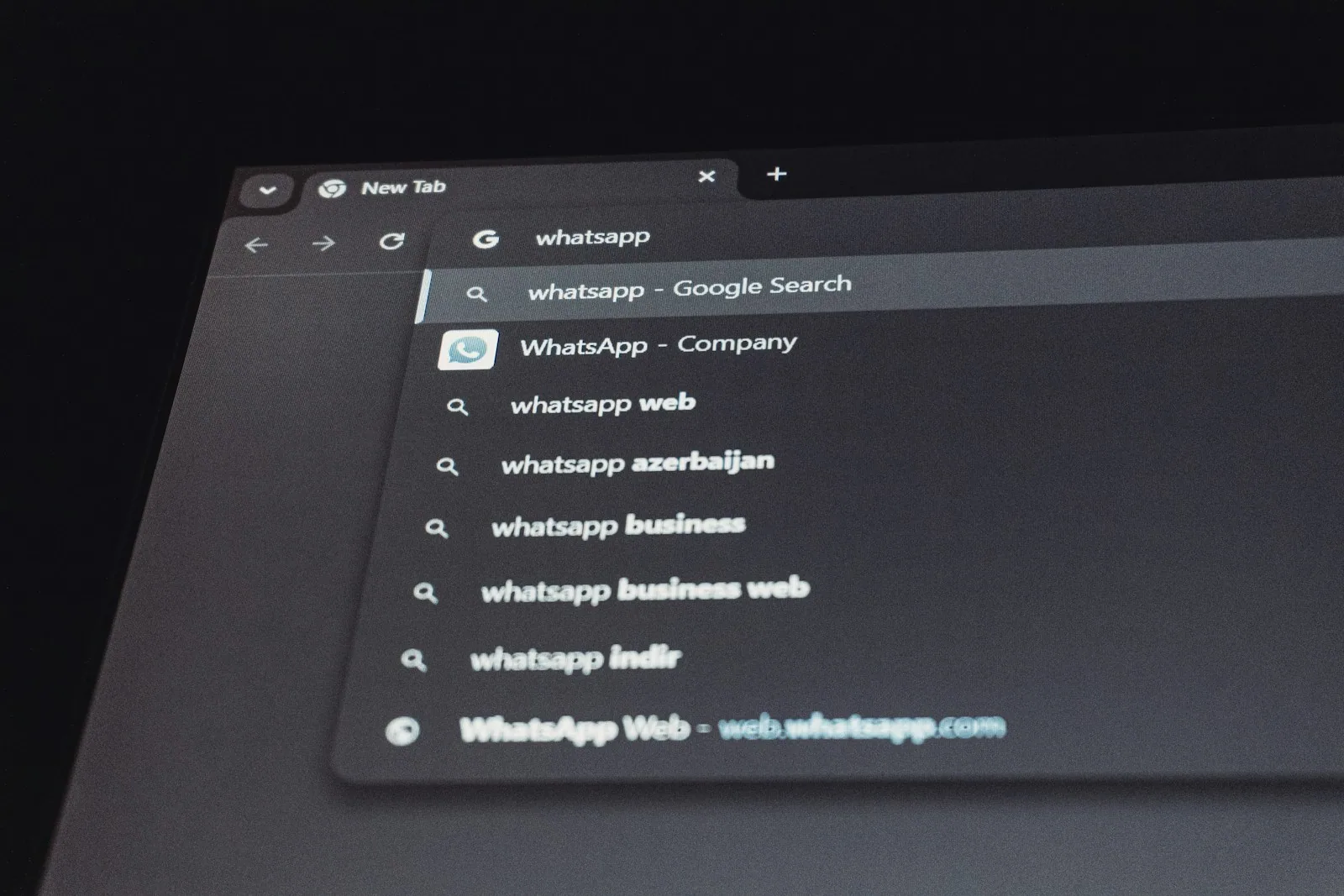
WhatsApp Web down became one of the most searched terms in the UK in May 2026 — and for good reason. Twice in less than two weeks the service went offline, leaving businesses without customer support and causing many to mistake a Meta technical fault for an account ban. This guide separates the two and shows the way out for those who cannot afford to stop.
TL;DR
- WhatsApp Web went down twice in May 2026: on 8 May (42 reports on Downdetector) and on 19 May (over 1,600 reports, with users redirected to a Facebook login screen).
- The outages were Meta technical faults — not bans. But the message "you've been temporarily blocked" scared those using the number for sales.
- WhatsApp Web is a mirror of your phone: if the handset loses connection, goes to sleep or switches off, the computer session goes down too.
- Relying on WhatsApp Web for business is fragile — and automating on top of it is the main trigger for bans in the 2026 wave.
- The stable solution is the WhatsApp Official API, and Voyia delivers that: an inbox that doesn't depend on a phone being on or a browser tab open.
What happened to WhatsApp Web in May 2026
May 2026 was a bad month for anyone working on a computer. WhatsApp Web — the version that mirrors the app in a browser — suffered two major instabilities in just over ten days. It's worth understanding each one, as they have different causes and severity.
The 8 May outage
On Thursday 8 May, users began reporting that the web version was closing by itself for no apparent reason. Difficulties centred on sending and receiving messages. Downdetector — a platform that monitors digital services in real time — recorded 42 reports related to the fault. It was a minor incident, resolved within a few hours, but enough to halt customer service during the working day.
The 19 May outage
The episode on Tuesday 19 May was more serious. From 8pm, anyone trying to open WhatsApp Web or WhatsApp Desktop was redirected to a Facebook login page — even without a Facebook account. Worse: some users received a notice saying they had been "temporarily blocked for abusing the services". Downdetector logged over 1,600 reports from 8pm. The instability was global and the service gradually returned to normal by around 9pm. Despite the scare, no one lost their account: it was a system fault, not a real ban.
Why WhatsApp Web goes down so often
WhatsApp Web is not an independent application. It is a mirror of what is on your phone. Even with multi-device mode — which keeps up to four devices connected without the phone being on all the time — the architecture still revolves around the main account on the smartphone. This creates failure points that wouldn't exist in a system built for the browser.
Three causes explain most outages:
- Fault on Meta's side. This was the case on 8 and 19 May. When WhatsApp's servers stumble, web and desktop go down together worldwide, and there's nothing you can do.
- Session expired or out of sync. The browser loses pairing with the phone and the tab simply stops updating. Refreshing or reconnecting the QR code fixes it.
- Phone connection. If the handset loses internet, enters battery saver mode or is switched off, the computer session degrades too.
How to tell which one hit you? If a monitoring site shows a spike in reports at the same time, it's Meta — don't waste time fiddling with your settings. If only your tab froze, start with syncing. And if the session always drops when you step away from your desk, the culprit is usually the phone entering battery saver mode.
For personal use, this is an annoyance. For a sales or support operation that lives on WhatsApp Web, every outage means lost revenue and unanswered customers.
WhatsApp Web down is not the same as a blocked number
The confusion in May had a concrete reason: the message "you've been temporarily blocked for abusing the services" that appeared on 19 May. Anyone using their number for work read that and panicked. But they are two different problems, and treating them as the same leads to wrong decisions.
WhatsApp Web down is an availability fault. The service went down for everyone, your account is intact, and the only thing to do is wait. You confirm this by checking Downdetector or social media: if half the world is complaining at the same time, the problem is Meta.
Number blocked is a different story. It's your specific account that has lost access, usually for violating the Terms of Service — bulk messaging, unauthorised automation, high complaint rates. Then your neighbour's WhatsApp Web works and yours doesn't.
Why does this matter in practice? Because the right reaction is opposite in each case. Faced with an outage, the worst thing to do is disconnect everything, create a new account or change your number — you only make things worse. Faced with a real block, waiting gets you nowhere: you need to act on the cause. Confusing the two costs time and sometimes the number itself.
The practical difference is simple: an outage passes on its own; a block does not. If you want to understand in depth how and why Meta bans business numbers, read How to Avoid WhatsApp Business Blocking in 2026.
The problem no one tells you: it was never built for businesses
Here is the point that the May outages laid bare. WhatsApp Web is a personal convenience tool — typing on a keyboard instead of a phone screen. It was never designed to support a commercial operation, and Meta makes that clear in its Terms of Service.
The risk increases when businesses try to automate the web version. In 2026, a wave of cheap platforms emerged promising multiple agents and automatic broadcasts "via regular WhatsApp". Almost all work by reverse-engineering WhatsApp Web — unofficial libraries that pretend to be a browser. Meta detects the signature of this type of software in the protocol.
The result was predictable. By January 2026, Meta had intensified enforcement and permanently banned thousands of UK business numbers running automation outside the Official API. The success rate of appeals for these cases was below 20%. In other words: most of the time, the number, contacts and history are lost for good.
In short: using WhatsApp Web as the backbone of a business combines two risks. The risk of availability (it goes down, as it did in May) and the risk of banning (it doesn't tolerate automation). To understand why the institutional solution is the way out, read WhatsApp Blocked: The Official API Is the Only Way Out in 2026.
What to do now when WhatsApp Web goes down
When WhatsApp Web stops working in the middle of the working day, follow this order before panicking:
- Check if it's widespread. Open Downdetector or search "WhatsApp down" on social media. A spike in reports = Meta fault, and there's no fix on your side.
- Refresh the tab. Many outages are just a desynced session. An F5 or close and reopen often fixes it.
- Check your phone. Make sure the handset has internet, is not in battery saver mode, and is switched on. WhatsApp Web depends on it.
- Reconnect the QR code. In "Linked devices", disconnect the browser and pair again.
- Try incognito mode. Several users managed to access via incognito browser during the 19 May outage.
- Consult the official source. The WhatsApp Help Centre provides step-by-step guidance for connection issues.
If none of this works and the problem is only yours — not widespread — stop trying tricks: it could be an account block, and then the path is different. That leaves an uncomfortable question: how many times a month can your business afford to stop customer service while waiting for the service to come back?
The solution for businesses: Official API and Voyia
The May outages have a clear lesson: no serious operation should depend on a browser tab mirroring a phone. The alternative is not a workaround — it's the WhatsApp Business Official API, the channel that Meta itself authorises for businesses.
The Official API runs on Meta's infrastructure. It doesn't need a phone on, doesn't need a tab open, and doesn't go down because your handset went to sleep. And because it's the authorised path, it doesn't get banned for legitimate commercial use. The problem is that the "raw" API is too technical for most businesses — it needs a platform on top.
That's where Voyia comes in, the customer service platform from Agathas Web built on the Official API. Instead of a fragile tab, you get a proper inbox with:
- Independence from phone and browser. Your account lives in the cloud; nothing breaks because the phone ran out of battery.
- Unlimited agents. The whole team responds from the same number, without paying per employee — the model we detail in Unlimited Agents on WhatsApp.
- Multi-channel. WhatsApp, Instagram and other channels on the same screen.
- Full compliance. Because it's the Official API, the risk of banning for automation is removed.
- History that doesn't get lost. Conversations stay in the system, not tied to a device.
And no, migrating is not the nightmare many imagine. In practice, the transition to the Official API usually takes five to seven working days, can keep the same number your customers already know, and doesn't require swapping SIMs or notifying your entire base. The technical work is handled by the platform — you just start serving from a stable screen instead of a tab that could disappear at any moment.
You can explore the plans and see the platform in action on the Voyia page.
WhatsApp Web vs Voyia: direct comparison
To make the decision objective, see how the two options perform on the points that hurt most in a commercial operation:
| Criteria | WhatsApp Web | Voyia (Official API) |
|---|---|---|
| Depends on phone being on | Yes | No |
| Goes down when phone sleeps or loses signal | Yes | No |
| Multiple agents on the same number | No (1 session) | Yes, unlimited |
| Risk of ban for automation | High | Virtually zero |
| Centralised cloud history | No | Yes |
| Meta-authorised channel for businesses | No | Yes |
| Cost | Free | Monthly plan |
Conclusion: stop relying on a browser window
WhatsApp Web is great for what it was designed for: replying to a personal message without picking up your phone. The outages on 8 and 19 May 2026 only confirmed what was already known — it's convenient but fragile, and it's not a foundation for a business. Every minute offline means unanswered customers and cooling sales.
If your operation still lives on an open tab and a phone that can't run out of battery, the next outage is only a matter of time. Migrating to the Official API with a platform like Voyia takes customer service out of the improvised zone. Want to see if it makes sense for your case? Talk to the Agathas Web team and request a demo — no obligation.
Related posts
Xfinity Outage: Business Continuity Lessons for UK Firms
The Xfinity outage took down TV, internet and even the support phone line. Discover what Comcast's failure teaches about avoiding single-channel dependency.

Customer Service During Strikes: Business Continuity with AI in the UK
Strikes by doctors, teachers, and transport workers can grind business to a halt. Discover how to keep customer service running with WhatsApp automation and AI agents.
Nubank Closure Message: What Went Wrong and What It Teaches UK Businesses
Around 20,000 customers received a notice that Nubank had been liquidated. It was false. Here's what happened and the lessons for UK firms.