iPhone 18 Rumours: Foldable, Variable Aperture Camera & 2026 UK Launch
Apple is reportedly splitting its launch, debuting a foldable and overhauling the camera. We separate solid leaks from mere speculation.
by Cleverson Gouvêa
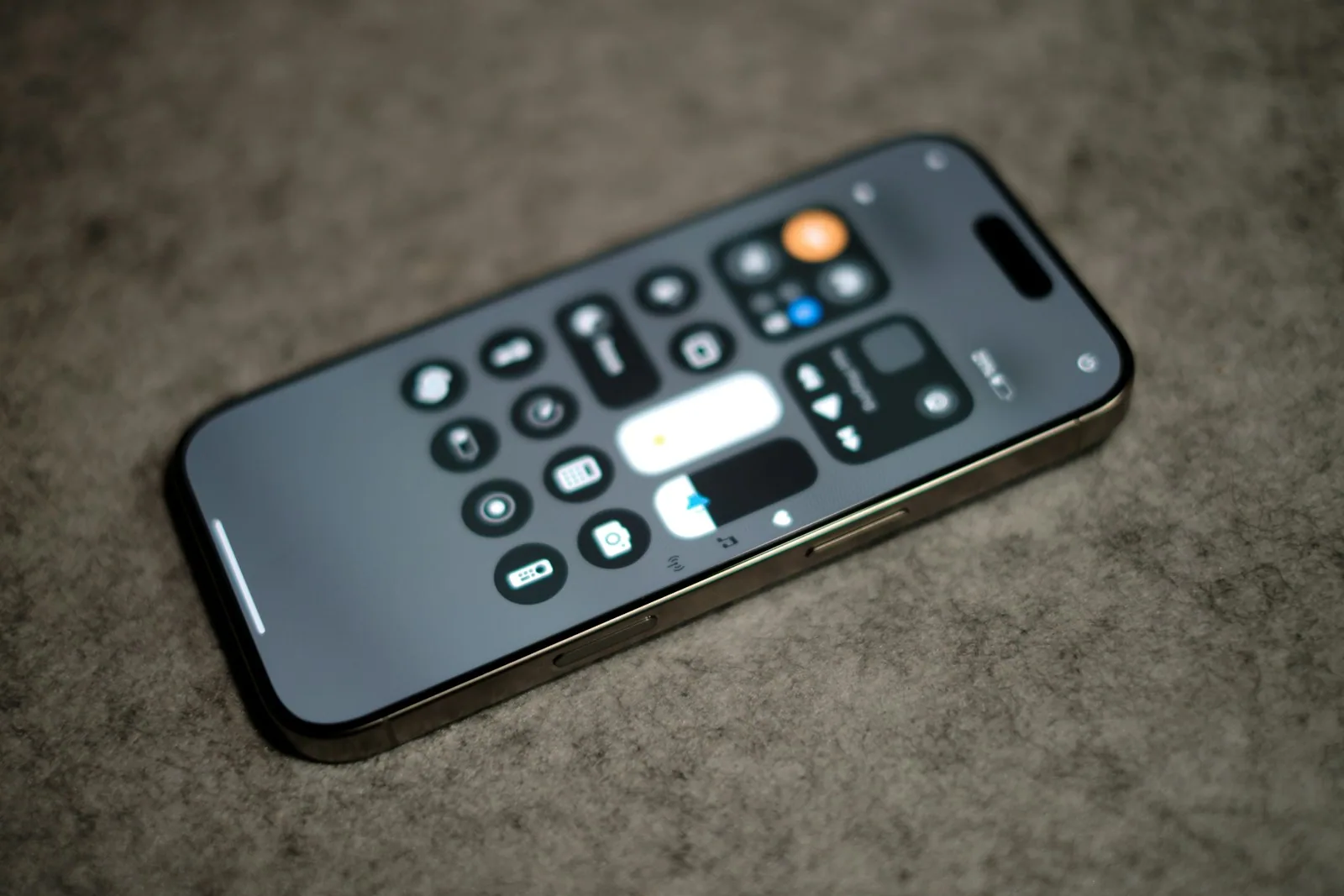
The iPhone 18 rumours have gained momentum in recent weeks, pointing to the biggest overhaul of the line since 2017: a variable aperture camera, under-display Face ID, a foldable iPhone debut and — for the first time in nearly two decades — a split launch schedule. We've gathered the most consistent leaks, with sources, and separated supply chain facts from pure speculation.
TL;DR — the iPhone 18 rumours summary:
- Variable aperture camera (mechanical) on Pro models, with components from LG Innotek and Foxconn
- Under-display Face ID on the Pro and Pro Max, shrinking the Dynamic Island by 25-35%
- A20 / A20 Pro chip on TSMC's 2nm process, ~15% faster and ~30% more efficient
- Apple's own C2 modem replacing Qualcomm across the entire line
- First foldable iPhone with an internal ~7.8-inch display in September 2026
- Split launch: Pro, Pro Max and foldable in autumn 2026; standard model and 18e in spring 2027
Why the iPhone 18 rumours are different this year
Every iPhone cycle generates leaks, but what sets the iPhone 18 rumours apart is the scale of change. This isn't an incremental camera or battery upgrade. Supply chain sources describe structural alterations: how Apple launches the line, the Face ID depth sensor, the camera optics and even the connectivity modem.
When multiple reporters with strong track records — such as Ming-Chi Kuo and the team at MacRumors{target="_blank"} — converge on the same points, the signal grows stronger. That's exactly the case here. Below, we break down each front, always remembering: until Apple takes the stage, it's all rumour.
If you want the processor and business calendar overview, we've covered that in detail in our article on the A20 Pro chip and the iPhone 18 launch. Here the focus is on sensory hardware and design.
Under-display Face ID and a smaller Dynamic Island
The most visually impactful rumour is partially under-display Face ID. On the iPhone 18 Pro and Pro Max, the flood illuminator — part of the system that projects infrared dots onto your face — would be moved beneath the OLED panel.
The practical effect: the Dynamic Island shrinks. Reports suggest a reduction of 25% to 35%, leaving a cutout roughly 14 to 15 mm wide. It's not a complete disappearance — the front camera and some sensors remain visible — but it's the first concrete step towards a nearly clean front.
Why hasn't Apple eliminated the island entirely?
Placing the entire Face ID array under the display still runs into limits of infrared light transmission through pixels. A partial implementation reduces the risk of authentication failure and maintains the security of facial unlocking — something Apple is unwilling to compromise for aesthetics. That's the most likely reading from engineers following the topic.
Variable aperture camera: what changes in practice
Among all the iPhone 18 rumours, the variable aperture camera is the most exciting for photographers. Today, iPhone lenses have a fixed aperture. The new feature would be a mechanical diaphragm, capable of opening or closing the light entry — like a professional camera.
In practice, this brings two benefits:
- More depth-of-field control: you choose a blurred background (wide aperture) or a scene entirely in focus (closed aperture), optically, without relying solely on software.
- Better performance in bright light: closing the diaphragm reduces light blowout and diffraction in very bright scenes, something digital ND filters simulate poorly.
Analyst Ming-Chi Kuo first pointed out the feature, and an October 2025 report listed LG Innotek and Foxconn as module suppliers. The front camera would also rise to 24MP, doubling the resolution for selfies and video calls.
For those comparing flagships, it's worth looking at how the competition handled optics this year — we analysed that in our review of the Xiaomi 17 Pro Max with Leica camera, which bets on large sensor hardware rather than a mechanical diaphragm.
A20 chip, C2 modem and hardware gains
The heart of the iPhone 18 rumours is the manufacturing process leap. The A20 (or A20 Pro on premium models) would be Apple's first chip produced on TSMC's 2nm node. Add to that the C2 modem, Apple's second in-house connectivity chip, which would fully replace Qualcomm components across the line.
| Component | iPhone 17 (current) | iPhone 18 (rumour) | Expected gain |
|---|---|---|---|
| Chip process | 3nm (A19) | 2nm (A20) | ~15% faster |
| Energy efficiency | Baseline | 2nm | ~30% better |
| Modem | Qualcomm / C1 | Own C2 | More speed and efficiency |
| Front camera | 18MP | 24MP | High-resolution selfies |
| RAM (standard model) | 8GB | 12GB | More headroom for on-device AI |
The 30% efficiency gain is the number that matters most day-to-day: it means more battery life running the same apps. And the 12GB of RAM on the standard model opens up space to process more Apple Intelligence features locally, without sending data to the cloud.
The first foldable iPhone
After years of speculation, the iPhone 18 rumours finally place Apple's foldable on a real calendar. The device — called by some leaks the iPhone Fold and by others the iPhone Ultra — would have an internal display of around 7.8 inches, folding in a book format.
The technical points circulating:
- OLED panel from Samsung Display designed to minimise the central crease, the Achilles' heel of Android foldables.
- Liquid metal hinge, aiming for superior durability and a less noticeable crease.
- Launch alongside the Pro models in September 2026, positioned as the most expensive iPhone ever.
It's Apple's biggest design bet since the iPhone X. If the crease really is nearly imperceptible, the company enters late but with the finish quality that many current foldables lack.
Split launch: the expected calendar
The most surprising change in the iPhone 18 rumours isn't technical — it's commercial. For the first time in nearly 20 years, Apple wouldn't launch the entire line at the same September event.
The likely calendar, according to sources:
- Autumn 2026 (September): iPhone 18 Pro, iPhone 18 Pro Max and the first foldable iPhone.
- Spring 2027 (early year): iPhone 18 standard, iPhone 18e and possibly a second-generation iPhone Air.
The cited justification is production complexity: ramping up volume of the 2nm chip and the new modem simultaneously for four or five models pressures the supply chain. Staggering reduces the bottleneck. It's worth noting that some more cautious reports suggest the standard model could slip to early 2027 — another reminder that dates, in rumour, are the most volatile information.
Battery, prices and what remains unknown
Not everything circulating has the same degree of certainty. Some iPhone 18 points still live in the grey zone of leaks — treat them as hypotheses, not facts.
On the battery front, reports about the Pro Max suggest a slightly thicker body to accommodate a larger cell. That makes technical sense: the C2 modem and 2nm chip promise efficiency, but the variable camera, brighter display and under-display Face ID consume power. A physically larger battery would be Apple's safety margin to deliver the battery life marketing will promise.
On colours, a mention of a "Dark Cherry" shade for the Pro models has surfaced. This is the kind of detail that leaks early and changes until the eve — colour doesn't require a production line defined months in advance, so it's among the least reliable items.
And prices? Here speculation is risky. The introduction of a foldable positioned as the most expensive iPhone ever could push the line's ceiling well above the current Pro Max. Traditional Pro models tend to maintain their price level, with Apple absorbing part of the 2nm node cost to avoid scaring consumers. In the UK, exchange rates and VAT (20%) remain the biggest distorting factors — any projection in pounds before the official announcement is a guess.
The practical recommendation: treat battery, colours and price as "awaiting confirmation". What has supply chain backing is the optical set, the silicon and the split calendar.
How to read leaks without falling into traps
Not every rumour is born equal. After covering several launch cycles, we've learned to weigh the reliability of iPhone 18 rumours by a few practical criteria:
- Supply chain source > "anonymous source": leaks about components (Samsung Display, LG Innotek, TSMC) tend to be more solid than design rumours.
- Convergence: when three or more independent outlets hit the same point, probability rises.
- Analyst track record: Ming-Chi Kuo and Mark Gurman make mistakes, but they get far more right than profiles with no history.
- Hardware is more predictable than software: production lines must be defined months in advance; software features can change until the eve.
Applying these filters, the variable camera, 2nm chip and split launch appear as the most solid rumours. The "Dark Cherry" colour and fine battery details, as always, fall into the "interesting, but wait for confirmation" category.
Is it worth waiting for the iPhone 18?
It depends on where you are. If you use an iPhone from two or three years ago and it still serves you well, waiting for a variable camera, under-display Face ID and a much more efficient chip makes sense — especially if you photograph a lot or want maximum battery life.
On the other hand, if your phone no longer lasts the day, buying the current model isn't a mistake: Apple Intelligence features already run well on current hardware, as we showed in our coverage of iOS 26 and its new features. And remember the split calendar: if you want the standard model, you might have to wait until 2027 anyway.
Conclusion
The iPhone 18 rumours paint the most ambitious iPhone in nearly a decade: a camera with mechanical diaphragm, a cleaner front, a genuine foldable and a real efficiency leap with the 2nm chip. It's still all rumour — but it's rumour with supply chain backing, not an evening guess.
At Agathas Web we follow these launches not out of gadget curiosity, but because each new hardware generation changes what you can build in apps, on-device AI and mobile experiences. Want to discuss how these novelties affect your digital product? Get in touch — we translate hype into technical decisions.
Related posts
AI Definition 2026: What UK Businesses Need to Know
Is your chatbot AI in the eyes of the law? Three 2026 regulations hinge on that answer—and most UK companies aren't ready.
Midjourney V8.2: AI Ad Creatives for UK Marketers in 2026
Draft mode, V8.2, commercial licence and the billion-dollar Hollywood lawsuit: a practical guide to Midjourney for anyone producing ad creatives.
Perplexity AI in 2026: Ready Your Website for AI Agents
Two August 2026 rulings change how AI agents read and use your website. Here's what to do now, in practice.