Nubank Closure Message: What Went Wrong and What It Teaches UK Businesses
Around 20,000 customers received a notice that Nubank had been liquidated. It was false. Here's what happened and the lessons for UK firms.
by Cleverson Gouvêa
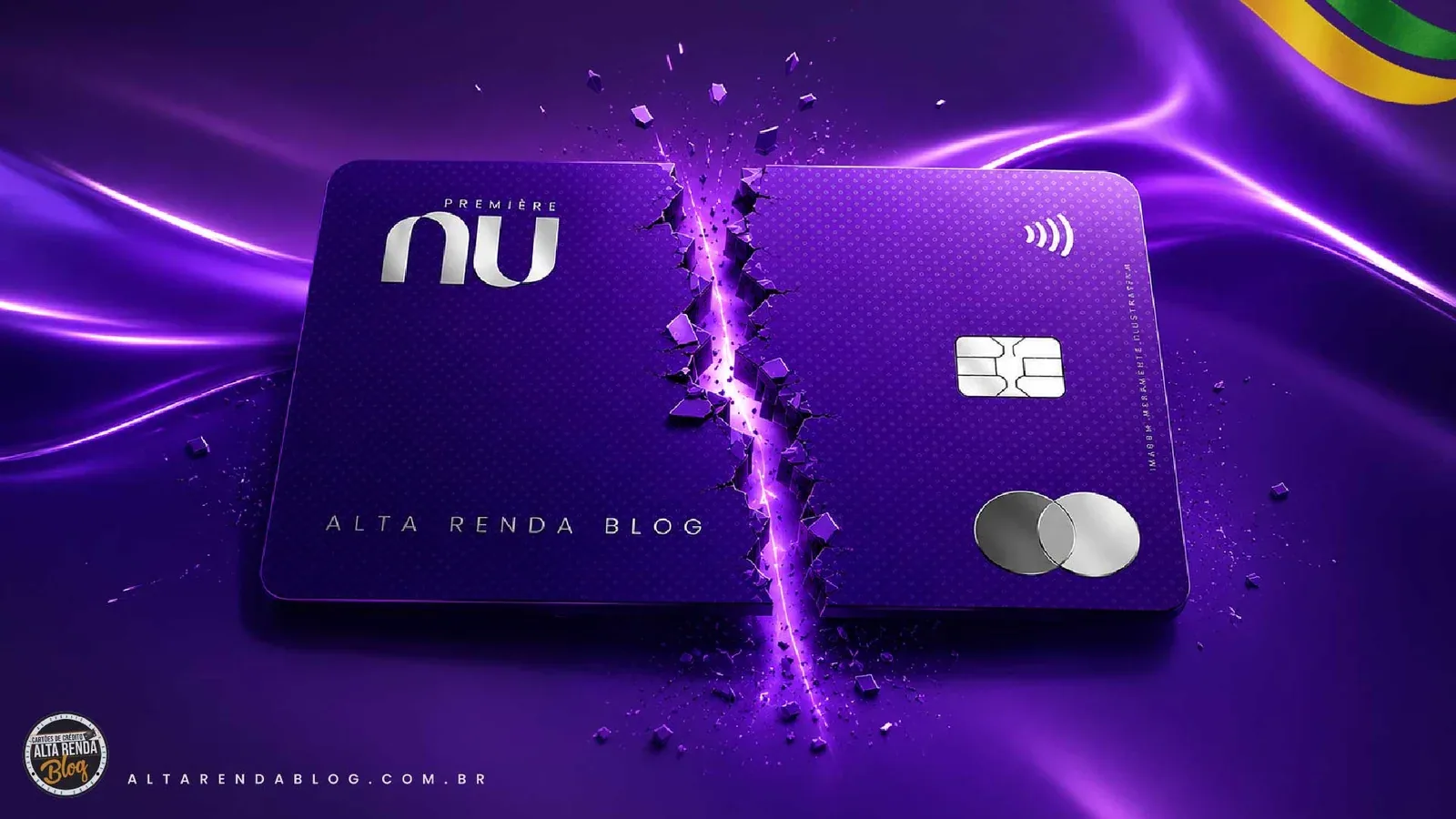
The Nubank closure message that circulated on 12 June 2026 alarmed thousands of customers: a notice claimed the Central Bank had ordered the fintech's extrajudicial liquidation and told users to claim their money back via the FGC. Calm down — it was false. It was an operational error by the bank itself, now fixed. In this guide, I explain exactly what happened, whether your money is safe, and how to distinguish real communication from a scam.
TL;DR
- The Nubank closure message was an internal error, not a Central Bank decision.
- Around 20,000 customers received push, banner and authenticated email with the false notice.
- The cause was a CDB communication template mistakenly triggered.
- Nubank retains all active licences; the Central Bank denied any intervention or liquidation.
- Your money remains protected by the FGC up to R$250,000 per CPF — but there was nothing to reclaim.
What the Nubank closure message said
On the morning of Friday, 12 June 2026, part of Nubank's customer base received a short, alarming notification. The text of the Nubank closure message read something like: "Important notice: the closure of NUBANK has been decreed. Click here to find out...", with instructions to contact the FGC (Credit Guarantee Fund) and request a refund of funds.
What made the episode serious was not just the content but the channel. The alert did not arrive via suspicious SMS or a dubious link. It came from within the official ecosystem: a push notification in the app, a banner on the app's home screen, and an authenticated email with a legitimate sender. For the average customer, all the signs we normally use to identify a scam were, ironically, pointing to the message's authenticity.
Within minutes, "Nubank" and "liquidation" were trending on social media. The combination of a technical and frightening word — extrajudicial liquidation — with the mention of the FGC created the perfect storm for panic. Extrajudicial liquidation is the process by which the Central Bank closes an insolvent financial institution and appoints a liquidator to pay creditors. Seeing that attributed to the bank where your salary sits is no small thing.
It was an operational error, not a liquidation
The official response came quickly. Nubank classified the episode as a one-off operational error, already identified and resolved, and reinforced that all its licences remain active, with no impact on operations. In other words: the Nubank closure message described an event that simply did not exist.
The Central Bank was equally direct. The regulator stated that the information "does not hold" and denied having decreed liquidation, intervention or any such process against the fintech. When the Central Bank publicly denies a liquidation it supposedly ordered, the case is closed: there was no liquidation at all.
It is worth noting the business's health context. Nubank is one of the largest digital financial institutions in Latin America, with tens of millions of customers and audited operations. A real extrajudicial liquidation of an institution of this size would be preceded by months of public signs — reports, news, market movements. Appearing out of nowhere, via push, on a Friday morning, was the biggest clue that something was technically wrong, not financially.
The technical cause: a CDB template mistakenly triggered
Here the case gets interesting for those working in technology. According to investigations, the origin of the Nubank closure message was a CDB communication template — Certificado de Depósito Bancário, a fixed-income instrument issued by the bank itself.
There is a scenario, rare but foreseen, where this template makes sense: if the issuer of a CDB fails, the investor holding that paper needs to be notified to contact the FGC. The template was written precisely for that hypothesis. The problem is that it was triggered out of context — for a broad slice of the customer base, not just investors in a specific instrument, and without any failure having occurred. A communication trigger designed for an extreme event leaked into the normal message flow.
This is the kind of failure that haunts any team operating communication at scale. When you send messages to millions of people, the template is code — and code has bugs, poorly configured trigger conditions, and test environments that escape into production. The difference is that in the financial sector, the "bug" reaches the customer as panic, not as a broken screen.
The speed at which the case escalated also has an explanation. A few screenshots of the Nubank closure message on social media were enough for the topic to go viral before any clarification. It is the digital herd effect: each shared screenshot seemed like independent confirmation, when in fact all came from the same failure. In a communication crisis, the rumour always runs faster than the correction — and those responding must be prepared for this asymmetry.
Is your money safe? How the FGC works
The short answer: yes. Since there was no liquidation, there was nothing to reclaim — the money was never at risk. But it is worth understanding the mechanism that the message itself cited, because it is your real safety net.
The FGC (Fundo Garantidor de Créditos) is a private entity, maintained by the financial institutions themselves, that guarantees deposits if an associated bank actually fails. Coverage is up to R$250,000 per CPF and per institution, with a global cap of R$1 million every four years. It covers account balances, savings, CDBs, LCIs, LCAs and other eligible products.
In other words: the FGC exists for the exact scenario the false message described. If one day an institution is truly liquidated, that is the channel through which reimbursement happens — and the legitimate notice will come with confirmation from the Central Bank and widespread press coverage, not via a solitary push that no one else mentions. For most account holders, with balances below the cap, protection is total.
In practice, the FGC is only activated after the Central Bank officially decrees liquidation and publishes instructions. From then on, payment is usually made through the fund's own app or a designated paying bank, upon identity verification. None of this happened in Nubank's case — precisely because there was no liquidation. Remembering this sequence helps: a real notice comes with a date, an official source and a formal process, never with the urgency of a single click.
How to distinguish real communication from a scam
The Nubank episode is rare: it was a false alarm issued by the bank itself. The much more common risk is the opposite — scammers imitating bank communications to steal data and money, riding exactly on moments of confusion like this. Use this checklist whenever you receive an alarming financial notice.
| Signal | Legitimate communication | Likely scam |
|---|---|---|
| Channel | Official app, authenticated email | SMS/WhatsApp with shortened link |
| Request for action | Informs, without extreme urgency | Demands immediate click "or lose everything" |
| Data requested | Never asks for password/token | Asks for password, code or photo of ID |
| External confirmation | Press and Central Bank confirm | Exists only in the message you received |
| Link | Official bank domain | Similar domain with swapped letters |
The golden rule: no serious bank asks for your password, approval code, or to transfer money "for protection" via message. If in doubt, do not click the notification link. Close everything, open the official app by typing it yourself, or call the official phone number printed on the back of your card. The same logic of staying calm and checking the official source applies to any service that seems "down" or in panic — I wrote about this in the guide what to do when WhatsApp Web goes down.
The lesson for businesses: when message automation fails
You could look at the Nubank closure message as just news. But for those managing a company's communications, it is a valuable case study. I have built customer service and message dispatch systems for years, and this error touches on three points every operation should review.
First, extreme templates need extra safeguards. A message capable of causing panic — notice of failure, closure, block — should not share the same trigger as routine communication. It deserves human confirmation before dispatch and an isolated test environment.
Second, the speed of the correction defines the damage. Nubank limited the harm because it responded within minutes, across all channels, with a clear message. Companies that take hours to position themselves leave a vacuum filled by rumour and scammers.
Third, the right channel matters as much as the right response. For a business that talks to customers on WhatsApp, having a stable, verified, controlled number is what allows you to correct an error before it becomes a crisis. Losing that channel — through blocking or using amateur tools — leaves you mute precisely when you most need to speak. I cover the risks of losing a business number in the article on how to avoid WhatsApp business number blocking.
This is where automated communication stops being a technical detail and becomes reputation. The same automation that saves thousands of hours can, with a poorly configured trigger, destroy trust built over years.
What to do if you received the message
If the Nubank closure message arrived on your device, take a breath — and follow these steps, which apply to any similar financial scare:
- Do not click the notification link. Even though it was legitimate in this case, the reflex of not clicking protects you from the scams that follow.
- Open the official app on your own. Type the app on your home screen; do not enter via a received link. Check that your balance and statement are normal — and they were.
- Seek confirmation from the press and official channels. Real news of a liquidation appears everywhere and on the Central Bank's website, not just on your screen.
- Do not transfer money "for safety". This request never comes from a real bank. It is the classic hallmark of a scam.
- Ignore "support" messages that appear afterwards. Episodes like this attract fake call centres. Only use the bank's official channels.
Conclusion
The Nubank closure message was a scare without financial consequence: an operational error, corrected within minutes, denied by the Central Bank, and with no impact on customers' money. The FGC, cited in the false notice, remains standing as real protection for the day a real failure occurs — which was not the case here.
The double lesson remains. For the customer: distrust urgency, check the official source, and never hand over a password or make a transfer via message. For the business: treat communication automation as critical infrastructure, with safeguards, tests, and a customer service channel under your control. If you want to structure your company's customer service so you are never left mute during a crisis, now is the best time to review how your messages are dispatched.
Related posts
Xfinity Outage: Business Continuity Lessons for UK Firms
The Xfinity outage took down TV, internet and even the support phone line. Discover what Comcast's failure teaches about avoiding single-channel dependency.

Customer Service During Strikes: Business Continuity with AI in the UK
Strikes by doctors, teachers, and transport workers can grind business to a halt. Discover how to keep customer service running with WhatsApp automation and AI agents.
WhatsApp Web Down: A UK Business Guide to Outages and Protection
WhatsApp Web went down twice in May 2026, exposing an uncomfortable truth: it was never built to support business customer service.